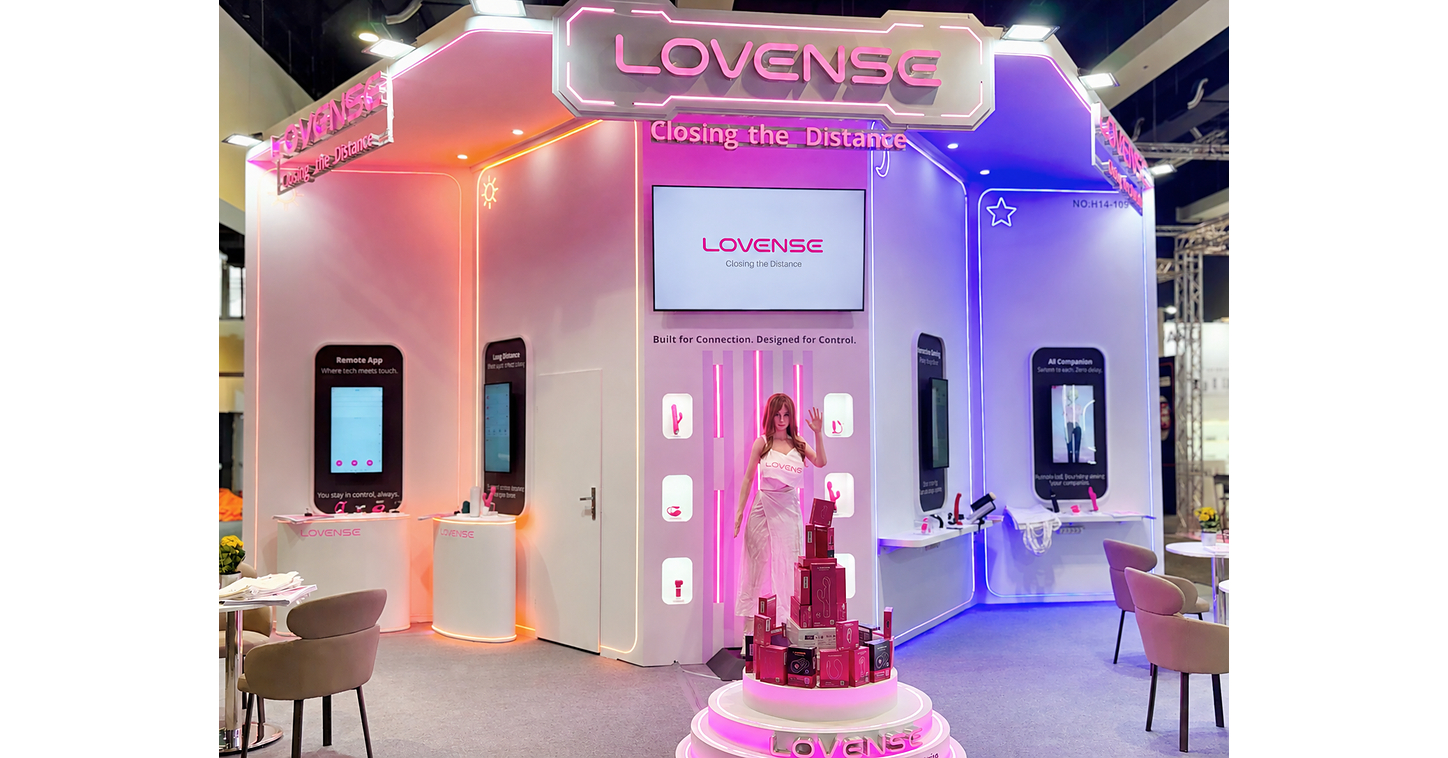
On September 18, 2026, Lovense announced its debut appearance at IFA Berlin 2026 — the Singapore-headquartered connected-intimacy company's first outing at Europe's largest consumer electronics show after years of exhibiting at CES in the United States. The announcement was distributed via PR Newswire on September 20. Alongside its existing connected-device lineup, Lovense used the booth to show the second prototype of its Intimate Doll in Europe for the first time.
Why It Matters
The mainstreaming story here is real, but the more interesting read is competitive. Lovense is the second major pleasure-tech brand to plant a flag at IFA this month — Womanizer exhibited September 4–8 from a stand in the IFA Beauty Hub and walked away with a Reviewed award for its Snap stimulator. Two of the largest players in the category independently deciding that Berlin in September matters as much as Las Vegas in January is a structural shift in where this industry does its mainstream legitimacy work. The routes they took there are different, and that difference is the strategy. Womanizer entered through the Beauty Hub and argued sexual wellness is beauty tech — a pitch aimed at retail shelf space and beauty-vertical ad inventory, and one that has been paying off in Ulta and Target door counts across the category. Lovense entered as a connected-electronics platform and argued sexual wellness is consumer tech — a pitch aimed at the app-ecosystem, gaming and long-distance use cases where it already dominates. Same show, two completely different arguments about what this category actually is. For the teledildonics segment specifically, the Intimate Doll prototype signals where Lovense thinks the ecosystem play leads: from app-controlled devices toward an AI-driven physical companion that sits at the center of the other hardware. That puts the largest connected-intimacy company in the world on the same road as Somnia Lab's Model L and Irontech's AI add-ons — but with a shipping product line, an installed app base and a developer ecosystem already underneath it. Nobody else in that race has the distribution.The booth itself was staged as a narrative rather than a product wall. Lovense built an experience titled "A Day in the Lovense Ecosystem," structured into four segments representing different moments in a user's day, each demonstrating a distinct capability: the Lovense Remote app for partner control, long-distance sync for geographically separated couples, gaming integration, and digital interaction. The framing is a platform argument — that the value is in the interoperable software layer, not any single device.
The Intimate Doll prototype is the newsier item. Per the company, the device features natural voice interaction and responsive physical movement, is designed to learn and adapt to individual user preferences, and operates in conjunction with other products in the Lovense ecosystem to enable coordinated experiences across multiple devices. Lovense has not announced pricing, specifications, or a ship date, and this is a second-generation prototype rather than a product — treat the capability claims as company statements, not verified performance.
Lovense's own framing of the show leaned on the normalization angle: "The presence of a sexual wellness brand at a mainstream consumer electronics show carries significance beyond a single company's booth," the announcement reads, describing it as reflecting "a growing public willingness to discuss sexual health as part of everyday life." The company says it has over 15 years of product development behind it and that its IFA showcase drew coverage from international and European media and content creators.
Sources
- Lovense Shines in European Debut at IFA Berlin 2026, Demonstrating How Technology Strengthens Human Connection — PR Newswire (company announcement)
- Womanizer Brings Sexual Wellness to IFA 2026, Biggest European Consumer Electronics Fair — EAN Online
Note: The Lovense account of its IFA appearance and Intimate Doll prototype comes from a single company-issued source. Afterglow found no independent hands-on coverage of the prototype; capability claims should be read as the company's, not verified.
Update — 2026-09-23
Initial entry — story first created.