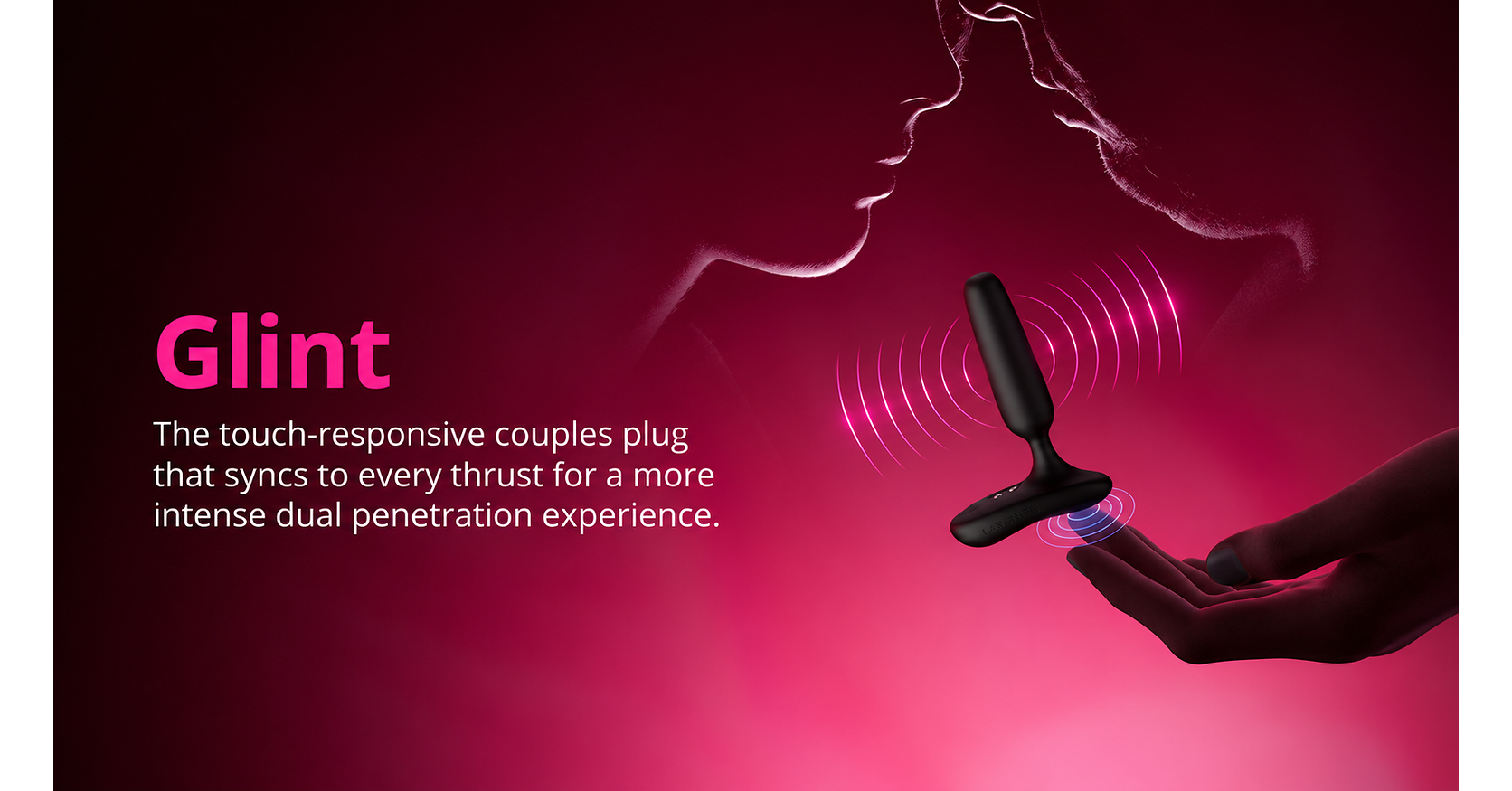
On October 20, 2026, Singapore-based Lovense launched Glint worldwide, a small vibrating butt plug for couples with a touch sensor in its external base. The sensor reads how much skin is in contact, at what angle and for how long, and moves the vibration across five intensity levels to match. In practice, a partner's thrust against the base during intercourse, or a hand on the base during foreplay, becomes the control signal instead of a phone screen. Lovense's press release frames the problem simply: "reaching for a phone to adjust a partner's toy can interrupt the very connection the toy is meant to create."
Why It Matters
Most connected toys still put the app in charge, which works for long distance and cam shows but is awkward when both people are in the same bed. Glint is Lovense's clearest attempt yet to make the *body* the input device. That is the same direction as Lovense's sensor-driven [Solace AI stroker](/stories/lovense-solace-ai-nvidia-jetson) and its [IFA showing of an interactive doll](/stories/lovense-ifa-berlin-intimate-doll). It also uses Lovense's ecosystem advantage: Toy Sync only pays off if your partner already owns another Lovense device, which builds lock-in across the household. Lovense's release cites a 2010 Indiana University study (43.8% of heterosexual men had used a vibrator, most of them during partnered sex) and a Grand View Research projection of a $107.85B sextech market by 2030. Those are the company's numbers. The product bet itself is simpler. Couples' toys are a crowded category (We-Vibe Chorus, LELO Tiani), and "responds to touch" is a feature competitors can't easily match without their own sensor stack. Watch whether the $238 list price holds after the October promotion ends. It probably won't.How it works. The wearer sets sensitivity and picks one of three response modes in the Lovense Remote app: Pulse (rhythmic feedback to touch), Sustain (continuous vibration while contact lasts) and Crescendo (vibration that builds as contact is held). The wearer can also switch Touch Response off before play. Through Lovense's Toy Sync, the base can drive a second Lovense device too. The company's example is one partner wearing Glint and the other wearing the Edge 2 prostate massager, so a single thrust triggers both toys. The usual app control, music sync and long-distance mode are still there. Lovense lists the specs as 21.5 mm (0.84 in) across, 55 g, up to 7,500 vibrations per minute, 95–178 minutes of battery depending on level, about an hour to charge, and IPX7. A hands-on review from Sex Toy Magazine, published the same day, puts the insertable length at 2.76 inches in black body-safe silicone. The reviewer called it beginner-friendly in size, found the noise a low hum that public background sound covers, and said the touch-responsive base made a bigger difference than she expected. That review carries affiliate links.
Price. USA Today's shopping desk reports an early-bird price of $109 through October 31, against a regular $238. At least one third-party retailer, HappyBed, already lists it at $129. Expect the real street price to land well below the headline list price.
A privacy detail. Glint includes Touch Records, which lets users review "selected interaction data after a session." Lovense says it is optional and off by default. Lovense has been criticized over connected-device data before, so the off-by-default setting is the right call. It also means a pleasure device is now logging physical contact patterns, not just app commands, and the launch release does not say where that data is stored.
Sources
- Lovense Launches Glint, a Touch-Responsive Butt Plug That Syncs Anal Stimulation with a Partner's Thrust During Intercourse — Lovense via PR Newswire (Oct 20, 2026)
- Lovense Launches 'Glint' Touch-Responsive Butt Plug That Syncs — AVN (Joanne Cachapero, Oct 20, 2026)
- Lovense Glint: Review Of The Touch-Responsive Butt Plug — Sex Toy Magazine (Oct 20, 2026)
- This new toy for couples responds to touch, not just vibration — USA Today (Oct 20, 2026)
Update — 2026-10-21
Initial entry — story first created.