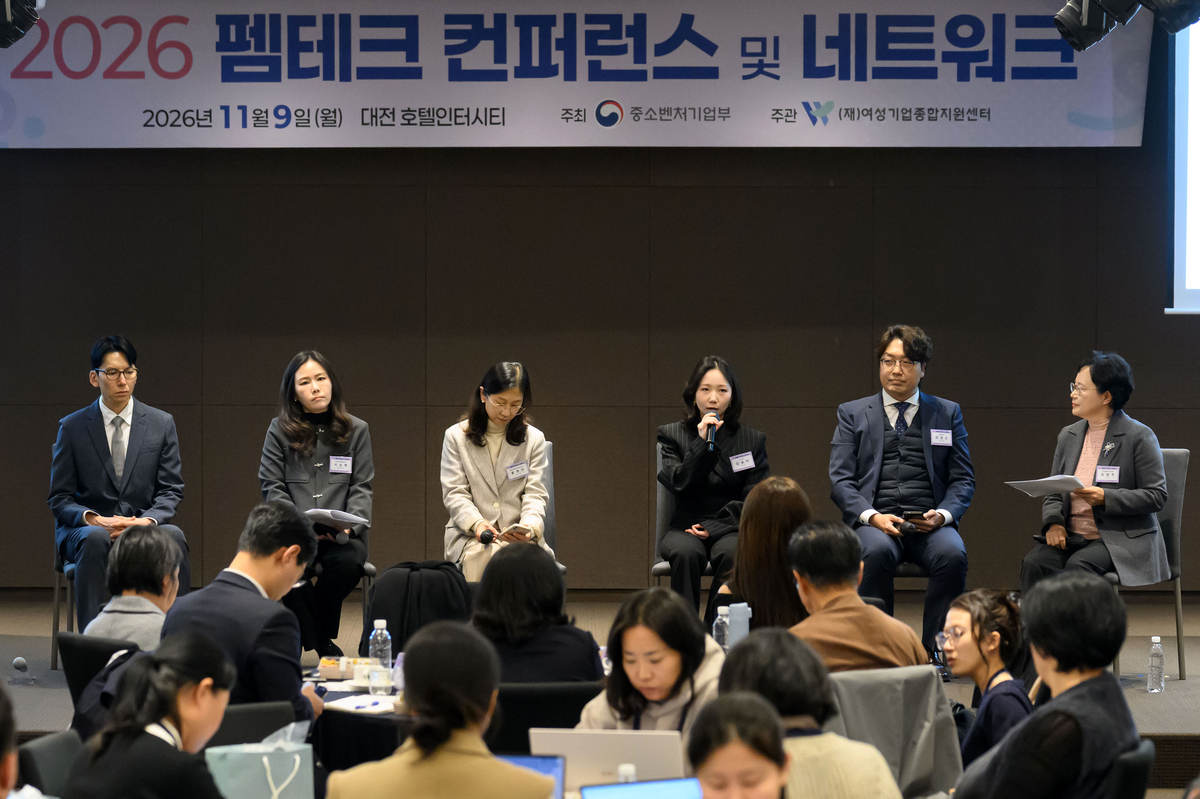
On November 9, 2026, South Korea's Women Enterprise Support Center (run by the Korea Women Entrepreneurs Association) held the 2026 Femtech Conference in Daejeon. About 180 company and industry participants attended, according to Chosun. The event was part of the country's first femtech industry-development programme, launched this year with the Ministry of SMEs and Startups. Its main data release was the first 2026 Femtech Survey from the Women's Economy Research Institute. Using a provisional definition of a femtech company as one earning more than 50% of revenue from femtech, the survey counted 450 Korean femtech companies with combined revenue of ₩3.8 trillion (about $2.6 billion) and average revenue of ₩8.45 billion.
Why It Matters
National counts of femtech companies are rare, and this one gives the Asian market a baseline: 450 firms and $2.6B in revenue is a substantial sector, larger than many investors assume. The fact that sales channels rank first among problems, above R&D or funding, matches what Western sexual-wellness founders report. Ad restrictions, retailer hesitancy and stigma are distribution problems more than technology problems. Korea's push for a formal classification and a dedicated fund is worth watching. Classification systems decide who qualifies for public money and retail programmes, and this one could determine whether sexual-wellness products count as "femtech" or remain outside it. Market-size projections like the 2034 figure come from forecasting firms with differing methods, so treat it as an indication of direction rather than a precise number.Asked about their biggest problems, 86.7% of companies named sales and marketing, ahead of product and service development (69.6%) and attracting investment. "I have seen many companies collapse at the sales stage even after making a product," the CEO of Innersia said on the panel, according to Seoul Economic Daily. Participants called for a dedicated femtech fund separate from existing women-owned-business funds, an official industry classification, regular statistics, and partnerships with large companies. Hanwha General Insurance described running an event with 30 wellness brands to give them direct access to consumers.
In the keynote, Lee Seung-hyun of the Korean Women's Development Institute projected the global femtech market growing from $10.67 billion in 2026 to $41.14 billion by 2034, a CAGR of about 18.4%. She also cited World Economic Forum/BCG figures showing women's health took only about 6% of global private healthcare investment over the past five years, concentrated in reproductive and maternal health and women's cancers.
Sources
- Global Femtech to Grow 18% a Year, but Korea Lacks Support System — Seoul Economic Daily (Jang Hyung-im, Nov 9, 2026)
- Femtech Firms Press for Sales Channel Support in Korea — Seoul Economic Daily (Jang Hyung-im, Nov 10, 2026)
- 55.4 Trillion Won Femtech Market Focus of 2026 Conference — Chosun Ilbo (Nov 9, 2026)
Update — 2026-11-12
Initial entry — story first created.