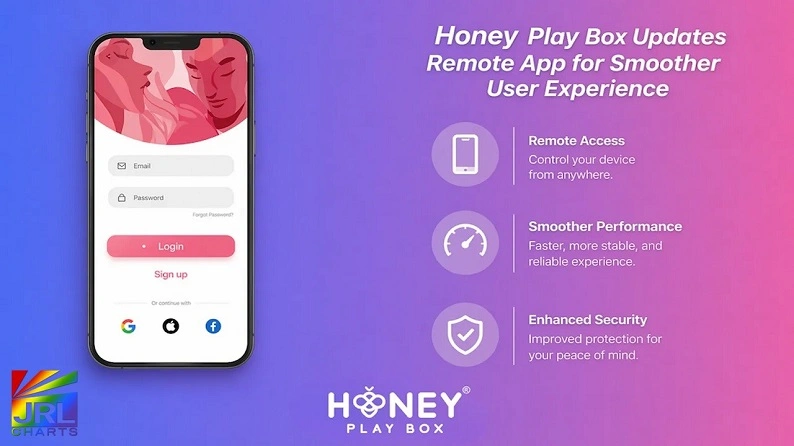
On April 28, 2026, Honey Play Box rolled out a major update to its HoneyPlayBox Remote app, bolting an in-app "Sexual Health AI" advisor and a community feature onto what had previously been a single-purpose Bluetooth controller for the brand's connected toys. The update is one of the first attempts by a mid-tier teledildonics manufacturer to combine app-based device control with on-platform sexual health consultation — a move that puts Honey Play Box closer to the "AI companion plus toy" positioning that Lovense, Lovehoney, and Satisfyer's parent companies have telegraphed but not yet delivered as a unified consumer feature.
Why It Matters
Mid-tier connected-toy brands have historically competed on hardware features (battery life, motor power) while leaving the app layer largely undifferentiated. This update reframes the app as a wellness platform — and bundles AI counseling into a category where most users have no other access to it. If the Sexual Health AI proves durable in the regulatory environment around AI chatbots, expect Lovense, Satisfyer, We-Vibe, and Kiiroo to follow with their own AI advisors. If Honey Play Box hits compliance trouble (under-18 user exposure, medical-claim disputes, FTC false-advertising scrutiny), it becomes a cautionary case study for the entire teledildonics category.The headline addition is the Sexual Health AI module, a chat-style interface that the company says provides "professional consultations and support" without requiring any connected toy to be paired. The app also adds a community layer that lets users post threads and share custom vibration patterns, plus what the company describes as advanced encryption for privacy and identity protection. The toy-control side of the app picked up a refreshed interface, stronger Bluetooth connectivity, customizable vibration intensities, and remote partner play modes for both close-range and long-distance use.
The Sexual Health AI feature is the more interesting development. Honey Play Box did not name the underlying model, did not disclose what its medical-information sourcing or guardrails look like, and did not name a clinical advisory board. That is a meaningful gap given the regulatory environment — Connecticut's SB 5 (passed Senate April 21), Nebraska's just-signed LB 525 Conversational AI Safety Act, and Oregon's SB 1546 all impose disclosure or content limits on AI chatbots that interact with minors or simulate emotional/medical relationships. Companion-style sexual-health bots are exactly the use case those laws were drafted around.
The community-pattern-sharing feature, by contrast, is straightforward — a UGC layer on top of vibration data, modeled on what Lovense has offered through its Remote app for years. Combined with custom encryption claims, Honey Play Box appears to be positioning the app as a destination rather than just a remote.
Sources
- Honey Play Box Updates Remote App for Smoother User Experience — EAN Online
- Honey Play Box App Upgrade Introduces Sexual Health AI and Social Features — JRL Charts
- HoneyPlayBox Remote — Google Play listing
Update — 2026-05-02
Initial entry — story first created.