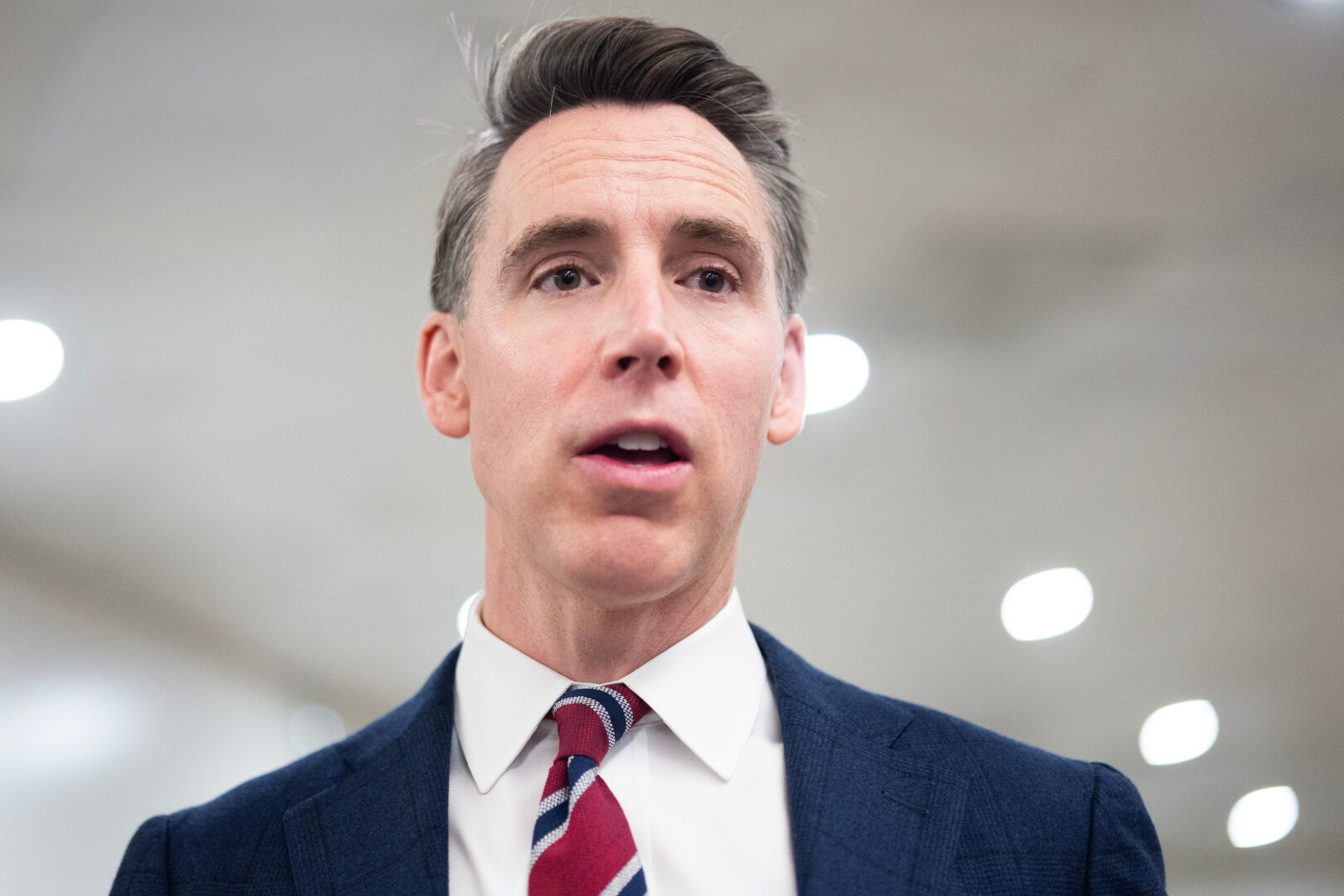
On April 30, 2026, the Senate Judiciary Committee unanimously advanced S. 3062 — the Guidelines for User Age-verification and Responsible Dialogue (GUARD) Act — to the Senate floor, becoming the most significant federal action so far on AI companion chatbots and the romantic/sexual subcategory that has driven much of the platform's growth. The bill, introduced in October 2025 by Senators Josh Hawley (R-MO) and Richard Blumenthal (D-CT), now has seventeen bipartisan cosponsors, and the Judiciary Committee's unanimous advance gives it real momentum heading into the Senate's May–June calendar.
Why It Matters
The Judiciary Committee's unanimous vote is the strongest federal-level signal yet that AI-companion regulation will arrive within the current Congress, not pushed to the next session. The $100K-per-violation penalty structure and the categorical minor ban combine to make GUARD operationally heavier than most state laws on companion chatbots, and the bill's age-verification mandate effectively requires every AI-companion operator to integrate the same identity-verification infrastructure that adult-content platforms have been building. For investors evaluating the AI-companion category — a segment that has raised over $200 million in 2025–2026 funding — GUARD is the regulatory tail risk that has to be priced into every deal.GUARD's core provisions are aimed squarely at the AI-companion category that has produced platforms like Character.AI, Replika, Candy.AI, and DreamGF. Operators that make AI companions "publicly available to consumers" would be required to implement reasonable age-verification measures for every account, would be flatly prohibited from allowing minors to access AI companion functionality, and would have to display disclosures at the start of every conversation (and at regular intervals during conversations) stating that the chatbot does not provide medical, legal, financial, or psychological services and that users should consult a licensed professional. The bill is backed by civil and criminal penalties of up to $100,000 per violation, calculated per user-session in the operative language, which could compound rapidly for a platform with millions of conversations per day.
The bill's path to passage is more conditional than the unanimous committee vote suggests. The Electronic Frontier Foundation issued a critical analysis on May 7 noting that, while the committee narrowed several initial provisions, the age-verification framework still requires platforms to tie every user to real-world identity, with no carveout for adults who want to use AI companions privately or for parents who knowingly want their teenagers to access them. The bill also intersects with state-level chatbot laws that have moved faster: Connecticut's SB 5 passed the state Senate in February, California's SB 243 was enacted in 2025, and Washington's Chatbot Disclosure Act took effect March 2026. GUARD would partly preempt and partly stack on top of those regimes, depending on how the floor manager handles the preemption language.
For the sex-tech industry, GUARD has two implications. First, AI-companion platforms whose product positioning explicitly includes romantic or sexual content (Candy.AI, DreamGF) are the most directly exposed — adult content layered onto an AI-companion product would face simultaneously TIDA, GUARD's age-verification framework, state-level age-verification statutes, payment-processor compliance, and the Visa BPSP regime. Second, the same operational stack (identity verification at session start, disclosures throughout, civil-penalty exposure) is increasingly the de facto baseline for any AI-driven sexual or relational product, including chatbot features inside teledildonics apps and Lovense's Emily-style companion robotics announced at CES.
Sources
- Senate Judiciary Committee Advances GUARD Act Regulating Minor Use of AI — Global Policy Watch
- Senate panel advances bill to curb AI chatbot 'companions' for kids — The Hill
- Congress Narrowed the GUARD Act, But Serious Problems Remain — Electronic Frontier Foundation
- S. 3062 - GUARD Act bill text — Congress.gov
Update — 2026-05-14
Initial entry — story first created.
Update — 2026-05-18
The bicameral picture is now complete. On April 30, 2026 — the same day the Senate Judiciary Committee voted unanimously to advance S. 3062 — Representatives Valerie Foushee (D-NC) and Blake Moore (R-UT) introduced the House companion to the GUARD Act, giving the bill a viable parallel path through both chambers as the Senate's calendar fills up with FY27 appropriations. The Foushee–Moore companion mirrors the Senate text on age-verification, the categorical minor ban, and the every-session disclosure requirement; it preserves the $100K-per-violation civil penalty and the criminal exposure for operators that knowingly allow minors to access AI companions that produce sexual content.
The political read on the bill has hardened in the week since. The Detroit News reported on May 17 that Senators Hawley (R-MO) and Cruz (R-TX) are now publicly framing chatbot regulation as a midterms-relevant safety issue, and momentum coverage from NBC News, The Hill, and Fox News all converge on the same point: the parents-of-suicide-victim hearings the Judiciary Committee held in March moved the issue out of "tech policy" and into "family policy." For AI-companion platforms positioning themselves around romantic and sexual content (Replika, Character.AI, Candy.AI, DreamGF), the combination of GUARD's federal age-verification floor with state-level chatbot laws already on the books in California, Connecticut, Washington, Georgia, Colorado, and (pending) Idaho and Oregon means the operational compliance stack now requires identity verification at session open, content gating by age class, and conversation-level audit logging — none of which the category was originally architected to support.
New Sources
- Reps. Foushee, Moore Introduce Bipartisan Bill Protecting Children from AI Companion Chatbots — U.S. Congresswoman Valerie Foushee
- Congressman Blake Moore Introduces Bipartisan Bill Protecting Children from AI Companion Chatbots — U.S. Congressman Blake Moore
- Chatbot bills look to address safety fears as midterms loom — Detroit News (USA Today network)
- Momentum builds in Congress to ban AI chatbots for kids — NBC News