On October 27, 2026, Swiss fertility-drug maker Ferring Pharmaceuticals and US biotech Gameto announced a signed agreement for Ferring to acquire Gameto. The deal is worth up to $1.3825 billion, with the final figure depending on development, regulatory and commercial milestones. Neither company disclosed the upfront payment or a closing date. The deal still has to clear customary closing conditions, and the two companies will operate independently until it does. It is one of the largest exits a women's-health startup has produced. The buyer is the company whose hormones fill a large share of the world's IVF stimulation protocols.
Why It Matters
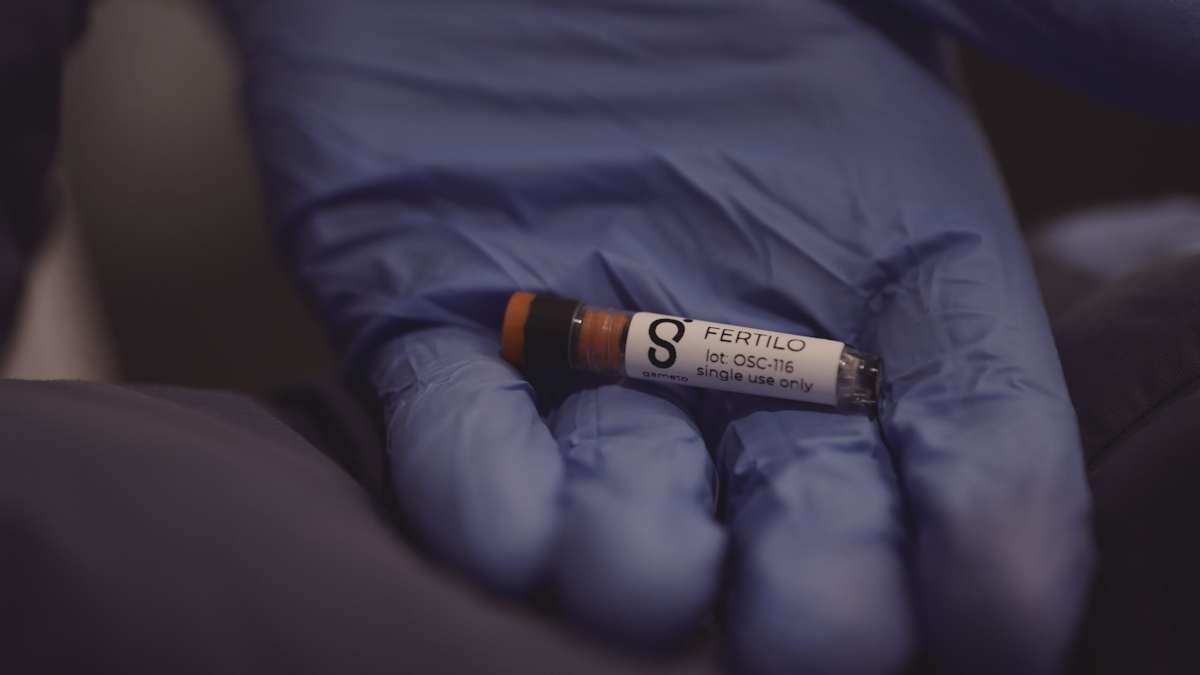
Femtech founders have long complained that the sector produces few big strategic exits. This one is milestone-heavy, but its headline value would put it near the top of the category's M&A table, and it shows that big pharma will pay for women's-health platforms that make an established procedure cheaper or easier, not only for new drug molecules. It also fits a wave of fertility consolidation this month, including [TFP's purchase of Manchester Fertility](/stories/tfp-acquires-manchester-fertility-group), in a market [PwC sizes at roughly $45B by 2030](/stories/pwc-fertility-market-45b-2030). Investors should watch the late-2026 Phase 3 readout. A strong result makes the milestones collectable and makes low-stimulation IVM a real competitor for clinic share. A weak one leaves Ferring holding an option that works in Lima and Sydney but not yet in the US.What Ferring is buying. The prize is Fertilo, Gameto's in vitro maturation (IVM) platform. Gameto takes induced pluripotent stem cells and turns them into ovarian support cells that behave like the granulosa cells that help eggs mature inside the ovary. A patient's immature eggs are cultured alongside these engineered cells, then fertilized or frozen once they mature. The stem cells provide the environment and never become the patient's eggs. According to European Biotechnology, conventional IVF usually takes about two weeks of hormone injections before egg retrieval, while Fertilo is designed to collect immature eggs after one to three days of stimulation. That could mean fewer injections, fewer side effects and fewer clinic visits. The technology came out of Harvard geneticist George Church's lab.
Where it stands. Fertilo is investigational in the US and not FDA-approved, which Ferring's own release states. A US Phase 3 trial is underway with 500 planned participants, comparing Fertilo against conventional IVM culture medium on ongoing pregnancies at 12 weeks. European Biotechnology points out that the design tests whether the engineered cells beat standard IVM. It does not show equivalence to fully stimulated IVF. AlleyWatch reports preliminary results are expected in late 2026. Gameto says Fertilo is already offered in Australia, Argentina, Peru and Mexico, where rules for this kind of technology differ. AlleyWatch puts Gameto's total reported equity funding at $127 million. The company also has a drug-testing ovarian model and a menopause program that AlleyWatch says is funded by ARPA-H.
The buyer's logic. Privately held Ferring sells IVF stimulation drugs including Menopur and Rekovelle. Pharmaphorum reports it booked more than €2.5 billion in revenue last year, up 10%, mainly on Menopur. Buying a technology meant to shorten hormonal stimulation looks like cannibalization, but it is better read as insurance: if low-stimulation IVM takes off, Ferring would rather own it than compete with it. "By combining Gameto's scientific innovation with our expertise and global reproductive-medicine platform, we see an opportunity to advance new approaches in fertility care and reach more patients worldwide," said Ferring chairman and CEO Jean-Frédéric Paulsen. Gameto CEO and co-founder Dr. Dina Turner called it "a defining moment" for the company.
Sources
- Ferring Pharmaceuticals and Gameto sign agreement for proposed acquisition — Ferring (press release, Oct 27, 2026)
- Ferring to buy fertility biotech Gameto for up to $1.38 billion — European Biotechnology (Oct 27, 2026)
- Ferring builds in reproductive health via $1.38bn Gameto buy — pharmaphorum (Oct 27, 2026)
- Ferring Pharmaceuticals to Acquire Fertility Biotech Gameto in Deal Worth Up to $1.38B — AlleyWatch (Oct 27, 2026)
Update — 2026-10-28
Initial entry — story first created.