Between September 15 and 17, 2026, three European women's-health companies closed early-stage rounds, and the spread of cheque sizes — €6.4M, NOK 7.5M (~$800K) and €560K — is a fair snapshot of where the sector's capital actually sits after the funding reset. All three are device or diagnostics plays with clinical validation already underway, not consumer apps.
Why It Matters
The composition of this week's deals is more informative than the totals. All three companies are building physical products or lab assays with institutional clinical partners attached — the Fetal Medicine Foundation, Herlev Hospital, a Novo Nordisk Foundation fellowship. None is a subscription app or a telehealth funnel. That is exactly the shift SVB data flagged when women's health venture funding fell from $3.2B in 2024 to roughly $2B in 2025: the bar at seed now demands evidence that used to be a Series A expectation, which structurally favours device and diagnostics teams who can point at a trial. Preeclampsia in particular has become the sector's most crowded early-detection race, and it is worth tracking as a single competitive field rather than as scattered deals. Aitiologic's €6.4M follows iPremom's €15M seed for a cell-free RNA first-trimester test and the Gates Foundation's commitment of up to $35M to ProFound Therapeutics for AI-driven preeclampsia target discovery. Three distinct technical approaches — tissue-resolved liquid biopsy, cfRNA signatures, expanded-proteome drug discovery — are now funded against the same clinical window, and Aitiologic's no-extra-draw integration with existing NIPT is the clearest adoption argument of the three because it does not ask the clinic to change anything. At the other end, Sylvia's €560K and Induvita's ~$800K are a reminder that Europe's women's health pipeline is still substantially funded by institutional venture programmes, angels and national innovation bodies rather than by generalist VC. Induvita's model — sell simulators into clinical training, generate revenue, then fund the harder regulated device — is a sensible workaround for a category that struggles to raise on promise alone. For anyone modelling exits here, the relevant comparables are strategic acquirers and procurement contracts, not IPOs.Aitiologic (Austria) — €6.4M oversubscribed seed. Announced September 15 and reported by Femtech Insider on September 16, the round was co-led by Heal Capital and Ananda Impact Ventures with participation from PUSH VC and LANA Ventures; Austrian law firm CMS confirmed on September 17 that it advised Heal Capital on the investment. The company is building Aitios, a tissue-resolved liquid biopsy platform intended to detect preeclampsia risk in the first trimester. Its practical edge is workflow: Aitios runs off non-invasive prenatal testing and does not require an additional blood draw. A validation study of over 1,000 pregnancies is underway with the Fetal Medicine Foundation. "Preeclampsia is a compelling first application because the unmet need for early risk prediction is significant and the clinical care pathway already exists," said CEO and founder Dr. Andreas E. Posch, adding that the longer-term ambition is "to transform a routine blood draw into a rich source of molecular information about maternal and fetal health."
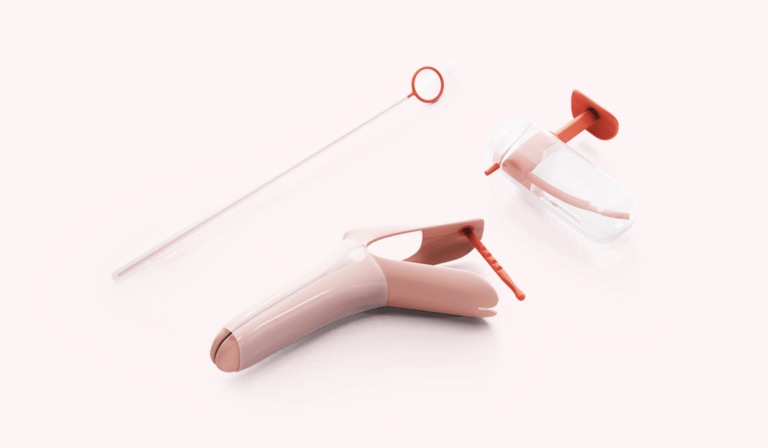
Induvita (Norway) — NOK 7.5M. Reported by Femtech Insider on September 17, the round was led by Hallgrim Bjørvik and Bjørn Åge Brandal with existing investors participating, bringing total raised to NOK 17.9 million. Founded in 2022 by midwife Hege Hansen and gynecologist Stine Andreassen, Induvita's premise is that core gynecological instruments — the speculum most notoriously — have barely changed since the 19th century. Its first products, the Runa and Ayla clinical-skills simulators, are now sold globally and exceeded NOK 1 million in first-year revenue. The new money funds the commercial launch of Vega, a redesigned vaginal speculum, while development continues on Iola, a labour-induction catheter.
Sylvia Health (Denmark) — €560K. Reported September 16, the funding comes from the BioInnovation Institute's venture programme. Founded by Andrew Stretton and Nikolaj Ulrik Friis out of the Novo Nordisk Foundation BioMedical Design Fellowship at the University of Copenhagen, Sylvia emerged from four months of clinical observation in obstetrics and gynaecology. Its first product is a medical-grade silicone device inserted vaginally — the company compares the form factor to a menstrual cup — to manage rectocele prolapse by supporting the posterior vaginal wall. It has completed functional testing and is in a 40-participant clinical trial at Herlev Hospital in Copenhagen. Pelvic organ prolapse affects an estimated 200 million people globally.
Sources
- Aitiologic Secures €6.4M to Develop Preeclampsia Blood Test — Femtech Insider, September 16, 2026
- CMS advises heal.capital on seed investment in diagnostics start-up aitiologic — CMS Law, September 17, 2026
- Induvita Raises NOK 7.5M to Modernize Gynecological Care — Femtech Insider, September 17, 2026
- Sylvia Health Secures €560K to Advance Pelvic Health Solutions — Femtech Insider, September 16, 2026
Update — 2026-09-21
Initial entry — story first created.