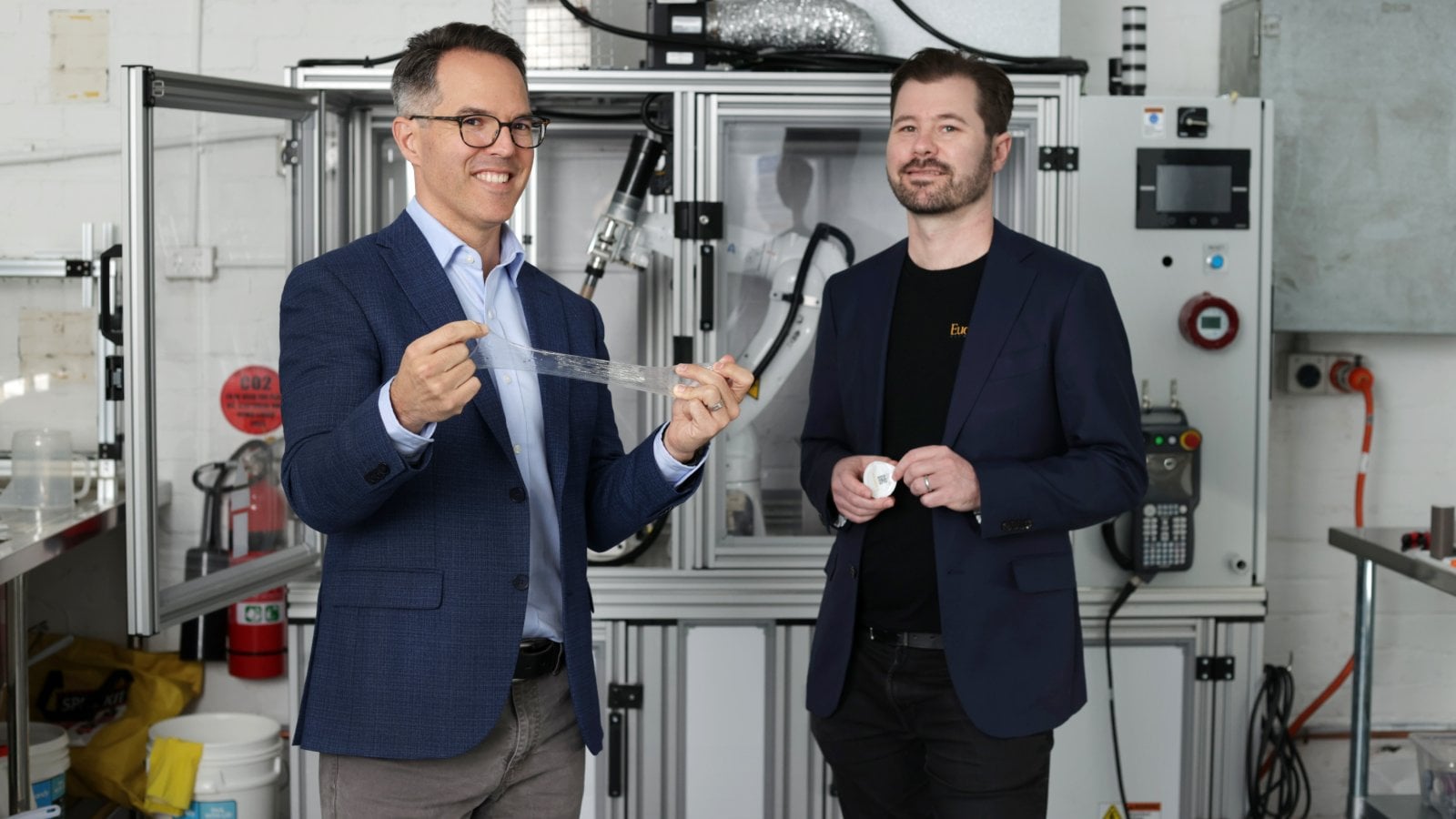
On October 12, 2026, Sydney-based Eudaemon Technologies told Mediaweek it has completed an oversubscribed A$4.5 million seed round and opened a further A$10 million raise. It has also opened a manufacturing facility in Annandale, Sydney to produce its hydrogel condom at scale. The seed money funds the manufacturing programme, pivotal clinical trials and international regulatory clearances. The new round is meant to cover clinical trials, regulatory work, manufacturing scale-up and commercialisation. The company is targeting a commercial launch in 2028, with Australia and the United States as priority markets. (Amounts are reported as "$" in Australian trade press and are taken to be Australian dollars.)
Why It Matters
Material innovation in condoms happens about once a generation. Latex dominated for a century, polyurethane and polyisoprene (SKYN) were the last real shift, and the graphene and "smart condom" pitches of the past decade mostly stayed in press releases. Eudaemon is different on paper: Gates-seeded science, a patent estate in the main manufacturing and consumer markets, its own production line, and an investor base that has just oversubscribed a seed round. The hard part is regulatory. A new condom material is a Class II device in the U.S. that needs breakage, slippage and barrier-performance data in clinical trials, and probably a contraceptive-efficacy study if it wants pregnancy-prevention claims. That is why the company is guiding to 2028, not 2027. The timing helps the pitch. Condom use among young people is falling in several markets (Four Seasons' CEO told Mi3 this week that "condom use among young Australians has been going backwards"), and STI rates remain high. Incumbents (Reckitt's Durex, Karex, Church & Dwight's Trojan, LifeStyles) have answered with marketing, not materials. A condom that feels better rather than just thinner is the one product argument that could shift a behaviour problem, which is why Eudaemon is building a consumer brand two years before it has anything to sell.The product is a latex-free condom that is about 50% water. It is designed to replicate the mechanical and thermal properties of human tissue more closely than latex or synthetic polyisoprene/polyurethane condoms. The technology came out of research funded by the Bill & Melinda Gates Foundation's Grand Challenges call for a next-generation condom that people would actually want to use. Eudaemon says it has spent more than a decade on the material and on manufacturing it reliably. It holds 61 granted patents, including in the U.S. and China, and has completed an initial clinical study. "We've developed the material, built the machines, tested the product and worked out how to manufacture something that hasn't been made before," said executive chairman and co-founder Nick Northcott.
The consumer marketing has started early. With creative studio ST JULES, Eudaemon launched "Operation International Relations," a campaign recruiting a "Team AUS" to take "the condom of the future" to America. It runs under the line "It's business. It's pleasure. It's diplomacy." and takes aim at the "greasy latex love sock that hasn't changed in 100 years." The brand promise is "Intimacy. Uninterrupted.", with a condom "designed to be forgotten." Northcott's stated long-term goal, per Marketing-Interactive and Mediaweek, is to become an official condom supplier to the Brisbane 2032 Olympics. Marketing-Interactive puts Australia's condom market at about A$246 million in 2025, citing Expert Market Research, and notes the Australian precedent of Ansell, which sold its LifeStyles/SKYN sexual-wellness division in 2017.
Sources
- Australian start-up reinventing the condom launches $10m raise and global consumer campaign — Mediaweek (Oct 12, 2026)
- Australian startup takes on condom giants with $10m raise and global ambitions — Marketing-Interactive (Oct 13, 2026)
- Four Seasons Naked Condom's controversial AI campaign lifts Woolworths sales 15% — Mi3 (Oct 13, 2026)
Update — 2026-10-13
Initial entry — story first created.