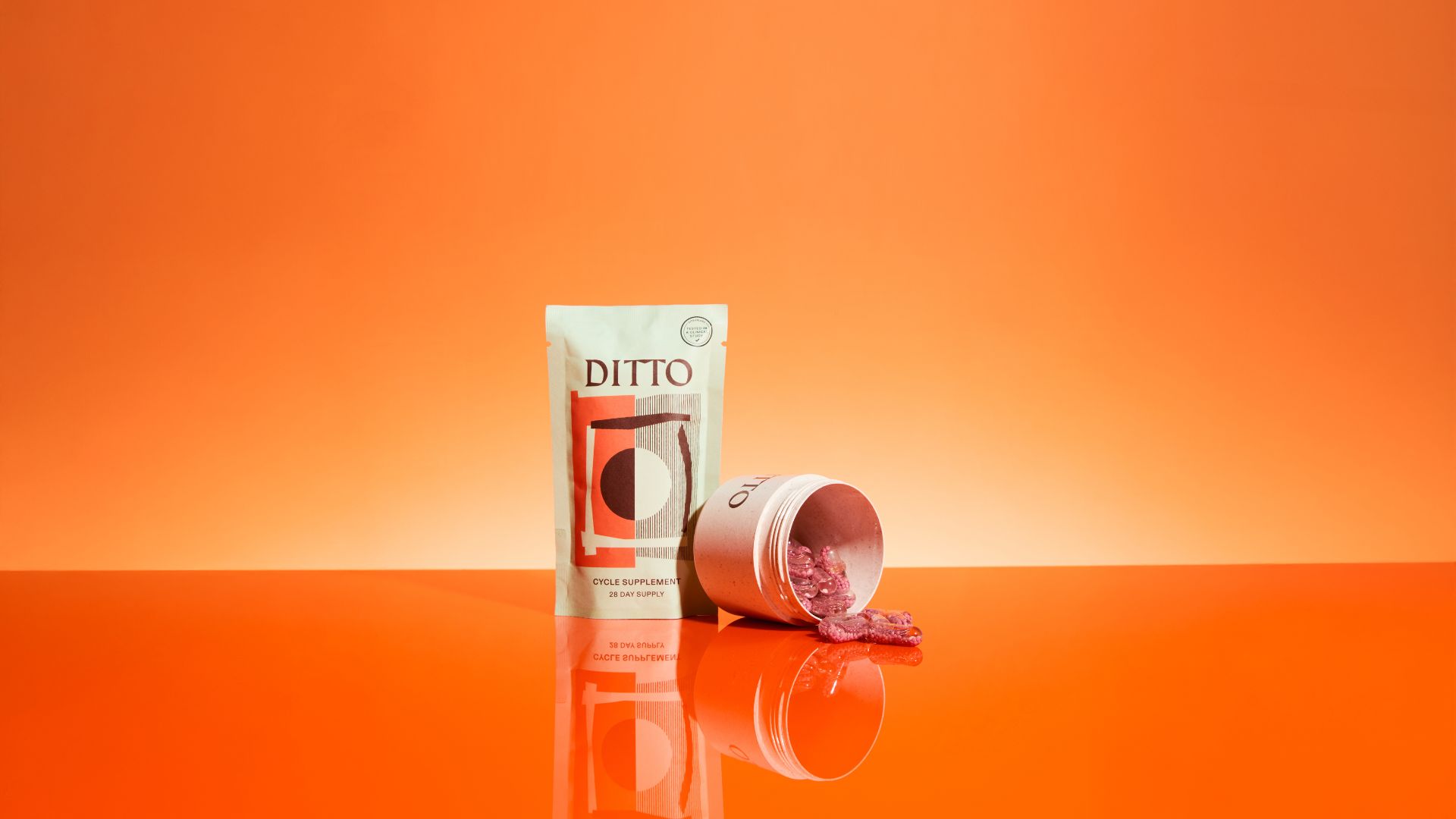
On July 28, 2026, London-based menstrual health company DITTO announced a €5.2 million ($6 million) Seed round led by FoodLabs, with participation from returning investor Eka Ventures and a group of angels. The money funds three things: more in-house research, an expanded science-led supplement range, and reach. It follows the company's £1.35M pre-seed in August 2025 — a fast step-up for a company founded in 2024.
Why It Matters
This round is a data point in a specific and increasingly clear trend: the women's health money is moving from *awareness* plays to *evidence* plays. Two weeks ago the sector logged a record $1.55B in 2025 disclosed equity, with a flagged Series A bottleneck as the main risk. DITTO's step-up from £1.35M to $6M in under a year suggests that bottleneck is passable specifically for companies that can show clinical work in progress. It also lands in the same week as two adjacent proof points — Natural Cycles securing a sixth FDA clearance for its fertility algorithm, and a Johns Hopkins systematic review concluding menopause care is failing women worldwide. The common thread: the femtech companies attracting capital right now are the ones building regulatory or clinical assets, not just brands. Supplements have historically been the softest, least-defensible corner of women's health; if DITTO's trials land, it changes what a menstrual supplement has to prove to get shelf space and reimbursement conversations. For the wider sexual wellness sector, PMS and PMDD are also a quietly important adjacency. Cycle-related pain, fatigue and mood disruption are among the most common suppressors of libido and sexual comfort, which puts evidence-based menstrual health squarely in the same demand pool as lubricants, pelvic health devices and menopause products.DITTO was co-founded by neuroscientist and nutrition scientist Alice van der Schoot and Adam Kugler, a former Brand Director at L'Oréal. That pairing is the whole thesis in miniature: a research operation with a consumer-brand engine bolted to it. Its flagship product, Premenstrual Daily, targets PMS and PMDD symptoms — fatigue, mood changes, pain — with ten nutrients including omega-3, magnesium and saffron, delivered via time-released beadlet biotechnology intended to improve absorption. The company says an initial clinical study saw 88% of participants report symptom improvement, and that the product has since entered a larger trial plus a real-world evidence study.
Standard caveats apply and should be stated plainly: an 88% self-reported improvement figure from an initial company-run study is a signal, not proof. Supplements are a category where the FTC has historically had to police claims aggressively, and menstrual and hormonal supplements are among the noisiest corners of it. What distinguishes DITTO's positioning is that it is explicitly racing toward the harder evidence rather than away from it — the larger trial and real-world evidence study are the interesting part, not the pilot.
Van der Schoot's framing of the problem is the sharpest articulation of the market gap: "Too many women are told their concerns are normal, or that they're being dramatic, and sent away without answers. Until DITTO, there was nowhere for women to find research about what they were going through, or science-led solutions built for the reality of what they were living." The company also publishes research on under-studied menstrual health topics — including the relationship between PMDD and ADHD — and says it translates emerging studies for a community of over 300,000.
The company's own stated view of where the category is heading: in menstrual health, clinical evidence is becoming the price of entry, and the first company to set that standard becomes the benchmark everyone else is measured against.
Sources
- DITTO raises €5.2 million to tackle menstrual health gaps with research and targeted supplements — EU-Startups
- Menstrual Health Startup DITTO Secures $6M To Expand Research Platform — Femtech Insider
Update — 2026-07-29
Initial entry — story first created.