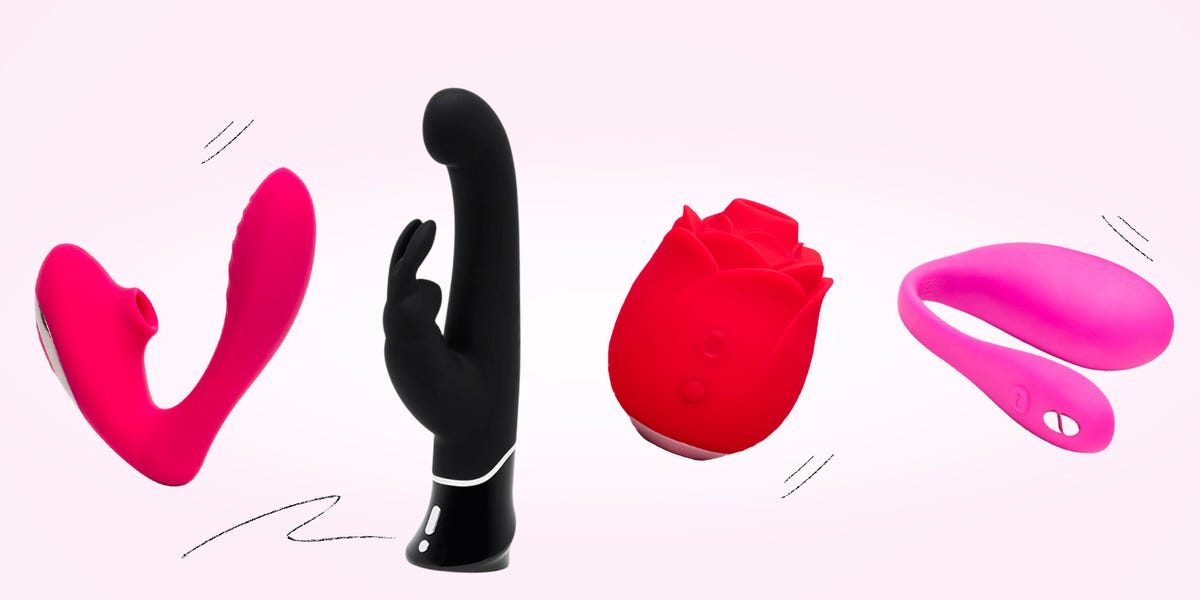
On September 1, 2026, Cosmopolitan UK published a behind-the-scenes piece by Sex & Relationships Editor Brit Dawson in which engineers and executives at Lovehoney, Smile Makers, LELO and Coco de Mer described how a pleasure device actually gets made. It's a rare on-the-record look at the R&D process in a category that usually only talks about finished products — and the details are more industrial than the marketing suggests.
Why It Matters
The multi-year development cycle is the most commercially consequential fact here, and it explains a pattern this publication keeps documenting: why a 2020 device like the Lovense Ferri still tops tested comparisons in 2026, and why the category's genuine innovations arrive in clusters rather than continuously. If a toy takes several years from anatomical research to shelf, then products launching now were specified in 2022 or 2023 — before the current wave of AI-adaptive stimulation claims, before the tariff shock, before censorship-driven design changes like the fruit-shaped-vibrator trend. The gap between what brands announce and what they can ship is structural. It also reframes the moat question for investors. The differentiators being described — acoustic testing infrastructure, vibration decoupling, a 10,000-person tester panel, medical-literature-grounded anatomical research — are all capital and time expenditures that a Shenzhen white-label competitor can't replicate by copying a shell. That's a more defensible answer to "what stops a knockoff" than patents, which the category litigates constantly and wins inconsistently. Finally, the LELO and Coco de Mer comments on non-anatomical design confirm a shift Afterglow has tracked from the censorship angle: abstraction is now the premium aesthetic *and* the platform-safe one. Two very different pressures, one convergent design language.Start with noise, which the industry treats as a measurable engineering spec rather than a footnote. "We have a dedicated sound box for our engineers to measure intensity levels," said Elisabeth Neumann, user research manager and sexologist at Lovehoney — who added that the quality of the sound matters as much as the volume. Neumann also mentioned, almost in passing, that one Lovehoney engineer previously designed submarines, which tells you roughly what tier of acoustic and sealing expertise the category now recruits from.
The internal mechanics are more complex than the outside implies. Neumann described decoupling vibrations so the head of a toy vibrates while the handle doesn't — a hard problem in a sealed, waterproof, palm-sized enclosure. Smile Makers' head of brand Samantha Marshall described the team workshopping vibration modes by humming and banging on tables to find the right rhythm and sound, which is both funny and a genuine prototyping technique for something that has no standard notation.
Timelines are the number that should recalibrate expectations: a single sex toy can take up to several years to develop. "We're designing from scratch, doing anatomical research, looking at medical literature, and talking to gynaecologists," Marshall said. "Testers share their wildest product dreams, which we draw on for inspiration." Engineers build prototypes, ship them to users, and collect feedback in hour-long interviews. Lovehoney, per the piece, has 10,000 testers on hand.
Design leadership at the premium end frames the aesthetic as functional. LELO chief marketing officer Luka Matutinović: "A product's look and feel are just as important as what it does" — pointing to designs that deliberately don't imitate body parts, a break from category custom. Coco de Mer CEO Lucy Litwack agreed: "A luxury sex toy is about evoking a sensory connection. Every aspect has to be considered: colour and texture, strength and performance." On what's next, Matutinović cited work on "virtual gadgets, remotely-connected devices, robots, immersive entertainment, and augmented reality," while Litwack pointed at component-level progress: "extraordinary advances in motor technology, vibration delivery methods, and battery design. The result is a generation of products that feel less like gadgets and more like precision instruments."
Worth flagging for readers: Cosmopolitan has a commercial collaboration with Lovehoney (The O Box), disclosed in the piece, and the article carries affiliate links. The engineering detail is still first-hand from named executives, but the source is not disinterested.
Sources
- Anatomy of a sex toy: The secrets behind your fave vibrator — Cosmopolitan UK
- Best Vibrating Panties, Tested & Reviewed 2026 — PleasureBetter (independent testing methodology reference)
Update — 2026-09-02
Initial entry — story first created.