On September 1, 2026, Cleveland Clinic published the results of its 11th annual MENtion It survey, and the headline finding is a contradiction the entire men's-health telehealth sector is quietly built on: 74% of men say they rarely or never trust health information shared by influencers, yet 39% admit they have tried a new diet or wellness trend after seeing it on social media. The national survey was conducted by YouGov Plc across 1,135 US men aged 18+, with fieldwork between June 11-14, 2026, weighted to be representative of American men.
Why It Matters
This survey quantifies the demand engine underneath the ED, TRT and peptide telehealth boom — and it is not, primarily, informed demand. A market where 30% of men are buying performance supplements off social media while 28% believe testosterone will improve sexual performance is a market where the marketing is outrunning the medicine. That is a regulatory exposure as much as a growth curve: it is precisely the gap the FDA has been working through this year with hidden-sildenafil recalls, and the FTC has been probing with claims enforcement. For operators, there is a genuine strategic read here. Distrust of influencers is not distrust of the channel — men are still converting off social content, they just don't respect the messenger. That gap is the opening for clinician-fronted brands: the platforms that put a named, credentialed physician at the front of the funnel are selling into a population that has explicitly told a pollster it wants that. For investors doing diligence on men's-health telehealth, the misconception data is also a churn signal worth modelling. A customer who buys testosterone expecting better sexual performance and younger-feeling energy — neither of which is the indication — is a customer who cancels in month four.The sexual-health numbers are the ones this industry should read twice. Half of men (50%) don't recognise that lifestyle choices can affect sperm quality. On testosterone — the single hottest category in men's telehealth right now — 28% believe testosterone therapy can improve sexual performance and 23% believe it could make men feel younger. On erectile dysfunction, the knowledge gaps are wider still: 62% are unaware that marijuana use can affect sexual performance or cause ED, 51% don't know that about smoking or vaping, 49% about poor exercise habits, 40% about obesity and 34% about alcohol.
"So much about men's health has been in the national conversation recently, including male fertility rates, testosterone replacement therapy, and the viral health-maxxing trends of everything under the sun," said Dr. Petar Bajic, director of the Men's Health Section at Cleveland Clinic's Glickman Urological Institute. "We wanted to get a better idea of the influence and emotional impact that social media can have on men and if it's changing their health habits and attitudes."
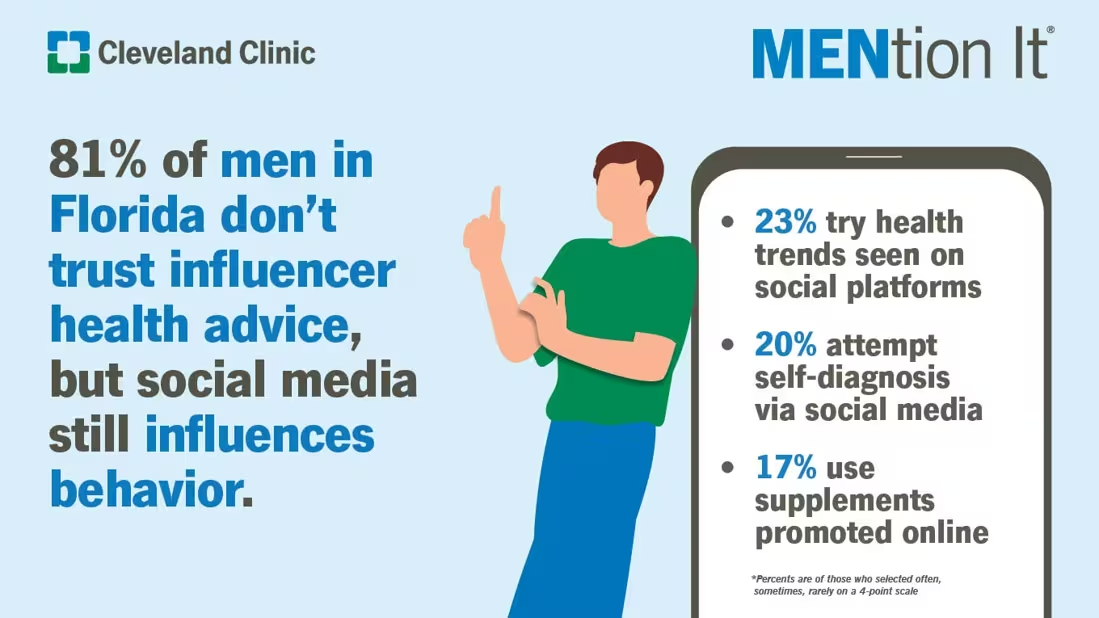
The self-directed-care findings are the commercial story. Two in five men (40%) say they attempt to self-diagnose based on social media, and nearly a third (30%) use supplements or performance enhancers promoted on social platforms. The emotional read is mixed: 73% say social content motivates them to improve their health, while 69% say it makes them feel concerned about their health and 44% compare their bodies or fitness to others online. A parallel statewide survey of 402 Florida men, released the same day, found 17% had obtained supplements or medications they saw online without first consulting a healthcare professional, and that 28% of Florida men incorrectly believe ED is a natural part of ageing.
Sources
- Cleveland Clinic: Despite Men Not Trusting What They See Online, Some Are Letting Social Media Drive Their Behaviors — Cleveland Clinic Newsroom
- Cleveland Clinic: Most Men in Florida Are Skeptical of Health Advice from Social Media and AI — Cleveland Clinic Newsroom
- Cleveland Clinic survey highlights social media's influence on men's health — Spectrum News
Update — 2026-09-07
Initial entry — story first created.