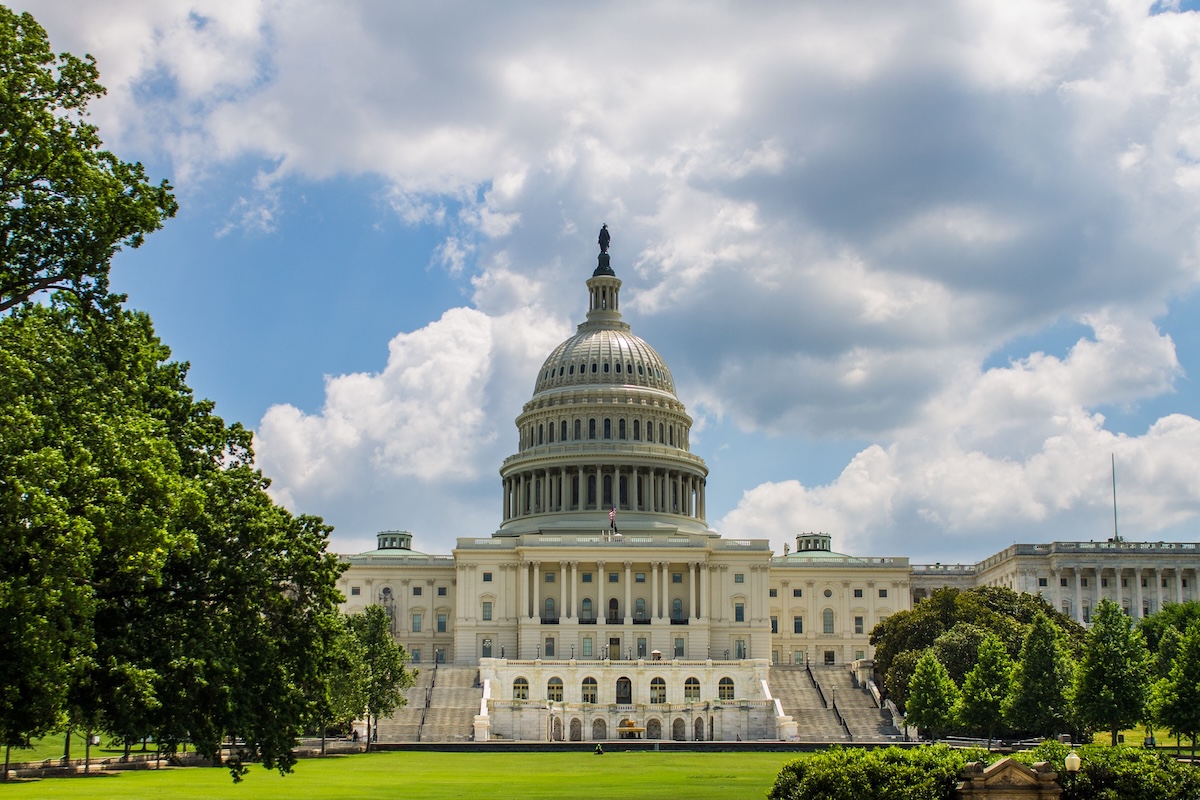
On or around July 17, 2026, a coalition of more than 30 organizations — led by the American College of Obstetricians and Gynecologists (ACOG), the Society for Women's Health Research, and the Women First Research Coalition — unveiled a "National Strategy to Close the Women's Health Gap" on Capitol Hill, calling for a $20 billion congressional commitment over the next decade. As reported by Femtech Insider, the plan is organized around five priorities: research and innovation, modern policy, data infrastructure, workforce support, and public education.
Why It Matters
For the sexual-wellness and femtech industries, the single biggest long-term constraint isn't consumer demand — it's the thin evidence base underneath conditions like perimenopause, low libido, painful sex, and pelvic-floor dysfunction. A decade-long, $20 billion federal research and data-infrastructure push would fund exactly the clinical validation that lets digital-health and device companies make defensible claims, win insurance reimbursement, and clear regulators. Even as an advocacy target rather than enacted law, the strategy signals that women's health has consolidated into a coordinated political constituency — the kind of alignment that historically precedes real funding shifts, and a tailwind for every company Afterglow tracks in the femtech and menopause lanes.The framing is a direct response to a durable structural problem: despite representing more than half the population, women remain underrepresented in biomedical research, and conditions from menopause to endometriosis to sexual dysfunction have historically been understudied and underfunded. NIH has long allocated well under 10% of its budget to women's-health-specific research, and the coalition's strategy is explicitly designed to give lawmakers a concrete dollar figure and roadmap rather than another awareness campaign. Forbes framed it as "the $20 billion question — what counts as women's health," noting the definitional debate over how broadly to scope a category that touches cardiology, oncology, mental health, and reproductive care.
The timing is notable. It lands the same week that W Group's Global Women's Health Investment Report pegged 2025 private femtech equity at a record $1.55 billion — a figure that, while a milestone for venture capital, is dwarfed by the public-investment gap the coalition is trying to close. Private capital has demonstrated demand; the strategy argues that foundational research and data infrastructure are public goods that VC alone won't fund. The endocrine and OB-GYN professional societies backing the plan give it clinical credibility as it heads into an uncertain congressional appropriations environment.
Whether $20 billion over ten years materializes is very much an open question given federal budget pressures, but the strategy establishes a benchmark and a unified industry-and-clinician ask that femtech companies, patient advocates, and investors can rally around.
Sources
- U.S. Strategy to Close the Women's Health Gap Calls for $20 Billion Federal Investment — Femtech Insider
- The $20 Billion Question: What Counts As Women's Health — Forbes
- Leading Women's Health Organizations Launch National Strategy to Close the Women's Health Gap — Endocrine Society
Update — 2026-07-20
Initial entry — story first created.