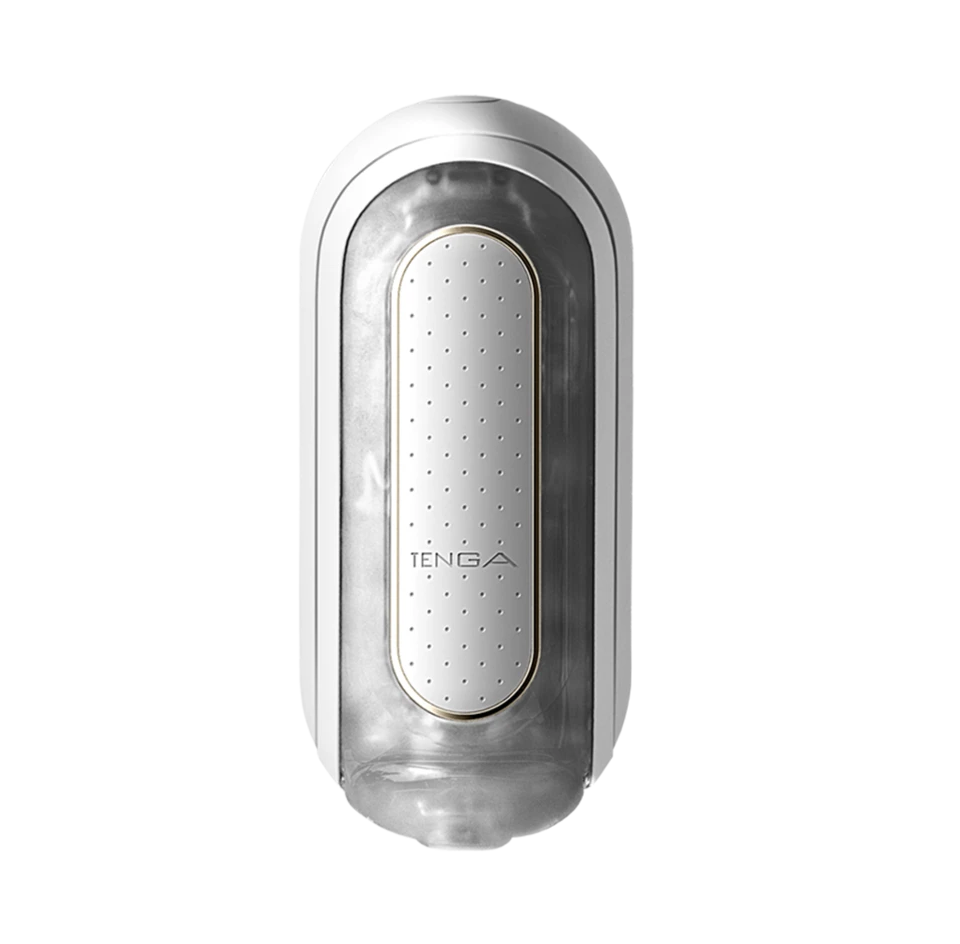
The Tenga Flip Zero EV is the electronic-vibration variant of Tenga's flagship reusable stroker line. Tenga — the Tokyo-based brand that legitimized the category in Japan in the 2000s and helped destigmatize male masturbators globally — built the Flip Zero EV as a bridge between the brand's design-led manual strokers and the app-connected automatic-thrusting tier from competitors like Lovense and Kiiroo. The EV stands for "electronic vibration," and the two-motor configuration is what separates it from the (still excellent) non-EV Flip Zero.
Why It Matters
The Flip Zero EV is a useful market signal: a manual stroker with vibration motors continues to sell well in 2026 even with $250+ automatic thrusters available, which means the price-conscious mid-tier of the male toy market remains underserved by app-connected competitors. For brand strategists, it's also evidence that Tenga's design-and-discretion-first positioning still works as a competitive moat against feature-stacking from app-first competitors.What makes it stand out is the design philosophy. The Flip Zero EV is not trying to compete with $250 thrusters. It's a manual, hinged stroker — you do the motion, the device adds texture, suction, and now two independent vibration motors that pulse independently. Pressing the top-mounted button cycles through five modes: low constant, high constant, pulse, alternating between the two motors, and a randomized pattern. Reviewers consistently rate the "alternating" mode as the standout, because the two motors are positioned at different heights along the sleeve and the alternating pulses create a sensation that's qualitatively different from any single-motor competitor. The internal texture is Tenga's signature swirled-and-ridged pattern, which the brand has refined across roughly two decades of iteration.
The consensus across long-form reviews is consistently positive — Mel Magazine called it a "rabid cult" object, Vada Magazine and Attitude both praised the discreet packaging and travel-friendly design, and durability reviews are mixed but trend toward the "lasts 1–3 years with regular use" range. The product ships with a storage case that doubles as a charging stand and inverted drying rack, which solves the single biggest hygiene problem with reusable strokers (drying the interior fully between sessions). A meaningful minority of reviewers flag it as too intense for highly-sensitive users — the dual-motor vibration is not subtle.
Price and where to buy: $115 USD direct from Tenga's US store, with discounting through SheVibe, Babeland, and authorized Amazon listings. Lovehoney, Spencer's, and major retailers carry it intermittently. Replacement sleeves and a separate lubricant (Tenga Hole Lotion) are sold by Tenga; the device is designed for use with water-based lubes only.
Materials and safety: The internal sleeve is a Tenga-proprietary TPE elastomer (not silicone — common for the price tier). Tenga publishes phthalate-free certifications and is one of the more transparent brands in the category on materials disclosure. The outer shell is ABS plastic. The device is IPX7-rated for the sleeve, with the motor compartment splash-resistant only. Charges via USB-C, full charge in about 90 minutes, runs roughly 60 minutes of continuous vibration per charge.
Bottom line: If you want a vibration-enhanced manual stroker that's been beta-tested by the market for nearly a decade, this is the default pick. Buy a non-vibrating Tenga Flip Zero ($85) if you want the same core design without electronics. Buy the Lovense Solace Pro ($249) if you want hands-free thrusting and app connectivity. The Flip Zero EV is the right answer for users who want better-than-average vibration without committing to the connected-device ecosystem.
Sources
- The Rabid Cult of the Tenga Flip Zero EV — Mel Magazine
- Tenga Flip Zero Gravity EV Review: Out of This World — Attitude
- Review: Good Vibrations with Tenga Flip Zero EV — Vada Magazine
Update — 2026-05-20
Initial entry — Section T product guide first created.