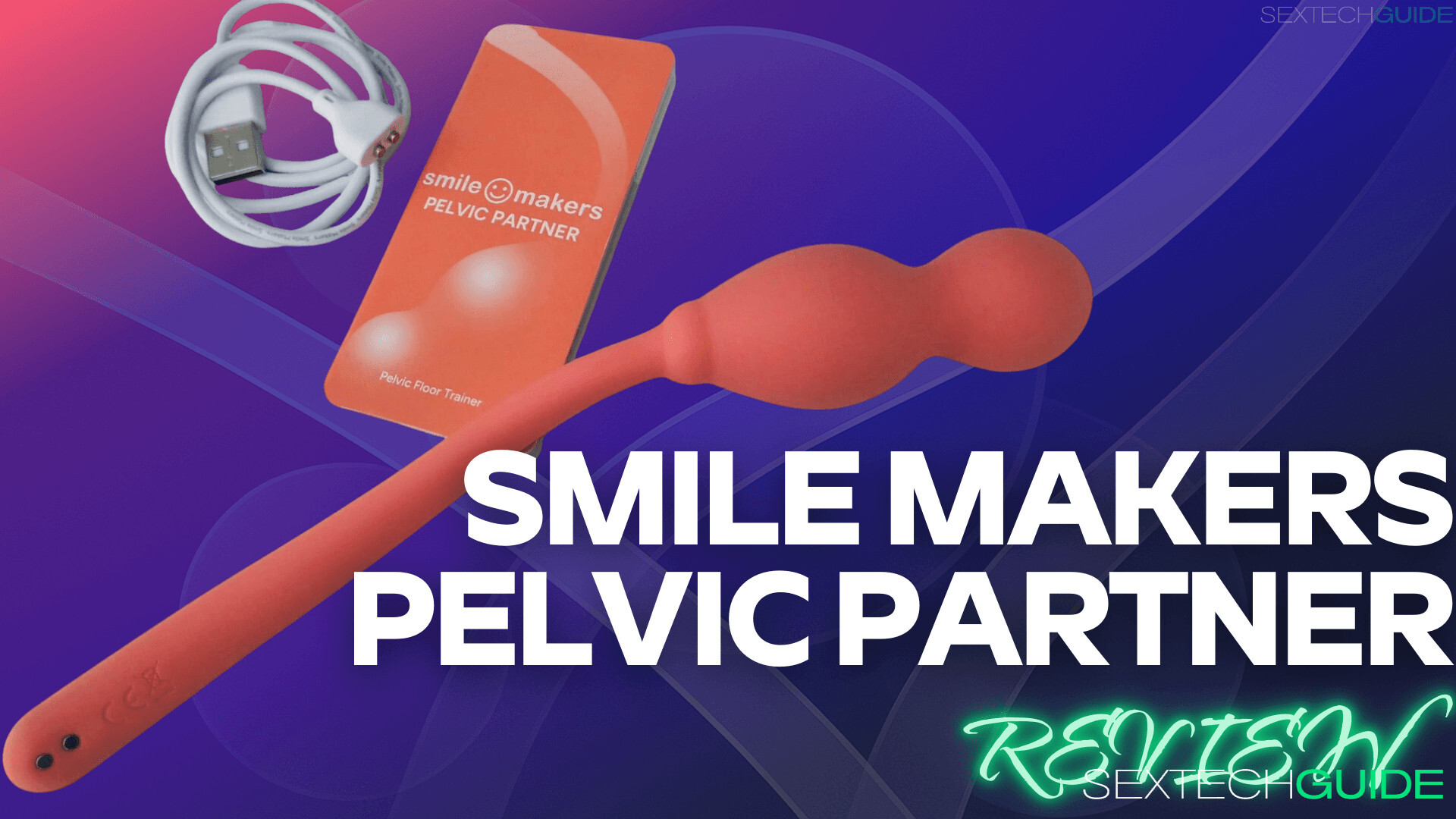
The Pelvic Partner is a $69 (£59.95) app-free pelvic floor trainer from Smile Makers, the Singapore-founded brand that has sold vibrators through mainstream beauty retail since 2013 and made its name getting sex toys onto Sephora shelves. It ran on Kickstarter in November 2025 and reached retail in early 2026, and it is the first device Smile Makers has built that isn't about pleasure. USA Today listed it at $55.20 on a 20% promotion in early September 2026.
Why It Matters
Pelvic health is where sexual wellness and clinical care have the least awkward overlap, and the pricing here is the story. A credible feedback device at $69 sits in impulse territory next to the $150-$250 app-connected trainers that have defined the category, and it gets there by removing the radio — no Bluetooth means no antenna, a smaller board, longer battery life, one less failure point mid-set, and no intimate health data on anyone's server. In a year when connected-device privacy has been a running sore for the industry, "we deliberately built it dumb" is turning into a feature you can put on the box. It also marks Smile Makers moving from pleasure into function, using the mainstream beauty distribution it spent a decade building. That's the same shelf-adjacency argument Reckitt made getting Durex and K-Y menopause-friendly certification, and the same one plusOne made putting intimate wellness on campus delivery: the fastest route to normalizing these products is standing them next to skincare rather than behind a curtain.What it actually does. Two bulbs on a stem with a flat tail. You insert it, squeeze, and it vibrates. That's it — no app, no Bluetooth, no dashboard, no data leaving your body. The clever part is the release: the buzz does not fade as you ease off, it stays on until you have fully let go, then stops dead. Every rep hands you two pieces of information — the moment you're squeezing correctly, and the moment you've actually released. Eight resistance levels grouped into four bands, stepped through with a single button at the tip of the tail.
The sensing is 360-degree rather than single-point, which is the specification that earns its keep. Most trainers in this price range read pressure from one spot, and pelvic floors are routinely stronger on one side than the other after childbirth or from favouring a hip. A one-spot sensor can sit exactly where you're weakest and report that nothing is happening. Reading all the way around also means rotation doesn't matter.
What reviewers say. SEXTECHGUIDE's Saasha G scored it 7.4/10 in a September 7, 2026 hands-on review after two weeks and eight sessions, and the headline finding is unflattering to most of us: it caught two decades of Kegels done wrong. Specifically, that she was releasing to about 70% and starting the next rep from a half-clench — a fault she had no way to detect and nothing had ever flagged. She praised the release feedback, the 360-degree sensing, the weighted head that stays put through long holds, the cushiony fast-warming silicone, magnetic charging and IPX6 shower-proofing, plus a travel lock and two-year warranty.
The criticisms are worth taking seriously. The eight levels are not a unit of anything — level 5 on one device is not level 5 on another, and the same user's level shifts with lube, depth, position and time of day, so there are no numbers to hand a clinician. There's no display, so pulses are your only readout and you will lose count. The vibration can be strong enough to become the point rather than the cue. Critically, the sensor reads force, not technique: recruit your glutes and hold your breath and it buzzes along happily. And calibration decides everything — the device zeroes itself the moment you press the button, so pressing it while tense sets a half-clenched floor as your baseline. That instruction is buried in the manual and deserves a warning label.
USA Today's September 7 coverage frames the category demand plainly: JAMA-published research estimates 1 in 3 women will experience a pelvic floor disorder in their lifetime, and the recurring problem is not that people don't know Kegels exist, it's that they can't tell whether they're doing them right.
Price and where to buy. $69 / £59.95 direct from Smile Makers, with periodic promotions taking it to around $55. That undercuts app-connected trainers like the Elvie Trainer and Perifit, which is the whole positioning: physical feedback instead of gamified dashboards.
Materials and safety. Body-safe silicone, cryogenically polished — frozen and surface-blasted to remove mould flashing without the residue a chemical polish leaves — so it's effectively non-porous. Water-based lube only; silicone lube will degrade the surface. IPX6, magnetic charging with no port to dry out, roughly two-hour charge. Smile Makers claims 65+ sessions per charge, which SEXTECHGUIDE flags as untested (they got eight sessions in and were still on the first charge). The USB plug adapter is not in the box.
The bottom line. Buy it if you can already locate your pelvic floor and want to confirm you're training it correctly — particularly the release, which is the half of a Kegel almost nobody coaches and this device is genuinely good at teaching. Skip it if you want measurable numbers to track or share with a physio; skip it entirely if you have pelvic pain, suspected prolapse, or are pregnant, which is Smile Makers' own guidance in its FAQ. And do the calibration properly: exhale, relax, then press the button.
Sources
- Smile Makers Pelvic Partner review: it caught two decades of Kegels done wrong — SEXTECHGUIDE
- Why so many women are replacing Kegels with this pelvic floor trainer — USA TODAY
Update — 2026-09-08
{Initial entry — story first created.}
Update — 2026-10-04
Now it has a panel verdict. In its pelvic floor trainer rankings updated September 29, 2026, the Good Housekeeping Institute (UK) named the Pelvic Partner best pelvic floor trainer overall, scoring it 86/100, the top score among 11 devices tested over six weeks by a panel of 50+ women who all had pelvic floor issues. Testers praised the "simple, clear feedback" of the vibration cues and the silky silicone with a flexible tail; the one drawback noted was that "some results were varied" for users who didn't commit to regular sessions. GHI lists it at £60 at Boots, which confirms UK high-street distribution.
The rest of the ranking is useful context. Issviva x Joylux's red-light/heat/vibration device came second at 83 (£359). Perifit (82, £119) won "best for motivation" for its app games. plusOne's £28 trainer also scored 82 for ease of use. Elvie's smart trainer was rated "best for beginners." An app-free £60 device beating £119-£359 app-connected and light-therapy rivals supports what we said at launch: for most users, a simple buzz that confirms you're squeezing correctly is the feature that matters.