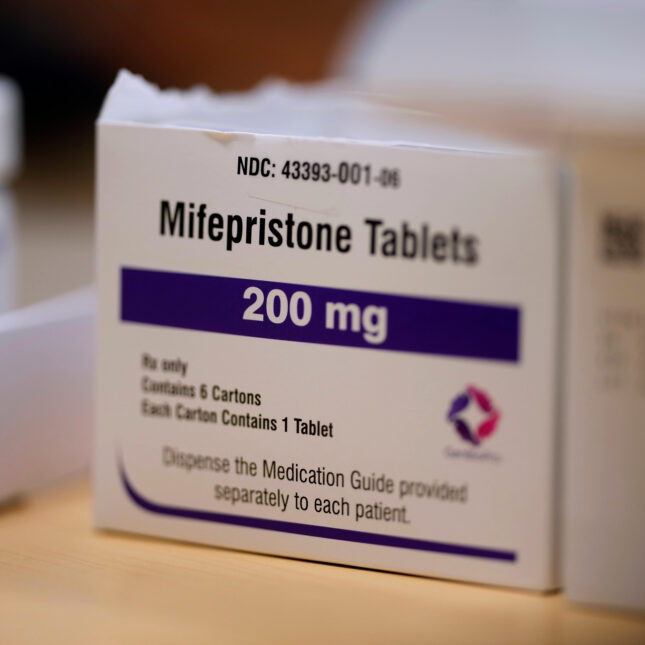
On April 7, 2026, U.S. District Judge David Joseph in Lafayette, Louisiana refused to block prescriptions for the abortion pill mifepristone from being filled by mail across the United States — at least for now. The ruling rejected Louisiana Attorney General Liz Murrill's request for a preliminary injunction that would have paused the FDA's mifepristone telemedicine rules while the underlying legal challenge proceeds. But Joseph also wrote that he believed the plaintiffs are "likely to succeed on the merits" of their challenge — and ordered the FDA to update the court on its safety review of mifepristone within six months. If the agency fails to complete that review and make "necessary revisions" within "a reasonable time frame," Joseph wrote, "the Court's analysis...will inevitably change."
Why It Matters
For telehealth abortion providers and the broader femtech ecosystem (Maven Clinic's fertility program, Natural Cycles, Flo Health, Clue), the combination of Joseph's six-month FDA clock and the merits signal means mail-order mifepristone access is on a determinable timeline rather than indefinite stable status. Investors, insurers, and benefit navigators that have been treating telehealth abortion as a stable line item should be modeling for a possible federal-district restriction by Q4. The Oregon insurance ruling separately shows that the religious-exemption carve-out lever — distinct from the abortion-substantive lever — is also being actively pulled by federal courts, which will affect benefit-design at femtech-adjacent employer programs.The order is a temporary win for telehealth abortion providers (Hey Jane, Choix, Aid Access) and the broader femtech-adjacent reproductive-care infrastructure that has expanded since the 2023 Alliance for Hippocratic Medicine SCOTUS standing decision restored mail-order distribution. But the six-month clock and Joseph's signal on the merits mean the procedural pause is itself a calendar — the FDA must produce its review, and the case is functionally on rails toward another ruling by Q4 2026 unless higher courts intervene.
The political backdrop has tightened. The Trump administration has explicitly elevated mifepristone safety review as an FDA priority; the agency announced its review in early 2026 and now faces a court-imposed deadline rather than a discretionary timetable. Louisiana's case is one of three active mifepristone-mail challenges (Texas and Missouri have parallel cases), and adverse rulings in any of the three could compress the addressable market for the telehealth abortion providers that have absorbed the post-Dobbs demand from states with bans.
Adjacent ruling, mid-April: a federal judge in Oregon ruled that a state law requiring insurance plans to cover abortion and contraception violates the constitutional rights of Oregon Right to Life, the anti-abortion advocacy group. That ruling is narrower (it involves a religious-objector carve-out from a state insurance mandate) but it adds to a cluster of April 2026 federal-district decisions chipping at the post-Dobbs framework that had stabilized into a state-by-state patchwork. Combined with the Trump administration's quiet zeroing-out of international family planning aid (covered in our trump-foreign-aid-contraception-cuts story), April was an unusually consequential month for the legal infrastructure around contraception and abortion.
Sources
- STAT News: Judge refuses to block sending abortion pill by mail for now, but says FDA must finish review
- NPR: Telehealth abortion will remain available for now, after a federal judge's ruling
- OPB: Federal court rules Oregon law requiring insurance to cover abortion, contraception unconstitutional
- KFF: Litigation Involving Reproductive Health and Rights in the Federal Courts
Update — 2026-05-01
Initial entry — story first created.
Update — 2026-10-01
The mail-order fight goes to the Supreme Court, state against state. On September 30, 2026, Louisiana, Alabama and Arkansas asked the U.S. Supreme Court to hear an original-jurisdiction suit against California, Massachusetts and New York. The suit challenges the "shield laws" that protect providers who prescribe abortion pills by telehealth and mail them into states with bans. Louisiana Attorney General Liz Murrill, the plaintiff in the April mifepristone case above, announced the filing. AP quotes UC Davis law professor Mary Ziegler: "This is the first time we've seen a state or group of states suing other states to challenge the validity of shield laws."
The same day, the three states filed a second suit in the Western District of Louisiana against 30 out-of-state pill providers and their officers. It alleges false advertising and other misconduct. Murrill said investigators in all three states made controlled purchases: "You can misrepresent who you are and obtain these pills. You can misrepresent the stage of your pregnancy." The complaint describes an online questionnaire, then a prescription, then shipment, which is the standard asynchronous telehealth model. It cites the Society of Family Planning's #WeCount estimates of about 1,000 abortions a month in Louisiana, 700 in Alabama and 300 in Arkansas.
The defendant states are fighting back. Massachusetts said its shield law "protects patients and providers, including those providing care through telehealth." New York AG Letitia James said she "will fight with everything in my power" to defend hers. California's AG said it would respond in court. Eight states have shield laws, per AP. The Supreme Court can take state-versus-state disputes directly but rarely does. The FDA is separately reviewing its mifepristone rules, and the Court preserved access in May while Louisiana's suit against the FDA proceeds.
Why it matters beyond abortion: The legal theory targets the asynchronous-questionnaire telehealth model itself. That is the same intake flow used for ED drugs, contraception, PrEP and GLP-1s. A ruling that lets one state reach providers licensed and practising in another would change the risk calculation for every cross-state DTC prescribing platform in sexual and reproductive health, not only abortion providers.
New Sources
- 3 GOP states go to US Supreme Court to challenge 3 Democratic-led states' abortion 'shield' laws — ABC News (AP)
- Louisiana asks Supreme Court to stop states from shielding abortion pill providers — WAFB
Update — 2026-10-10
The FDA's clock now runs past the midterms. On October 7, 2026, the Justice Department filed the six-month status report that Judge David C. Joseph ordered in April. The FDA says it expects study results by mid-December 2026 and a final report no later than March 2027. Only then will it decide whether to change the mifepristone REMS, which could include bringing back in-person dispensing. The review compares mifepristone with surgical abortion through 10 weeks' gestation and measures adverse-event rates among roughly 100,000 women who took the drug, against a comparison group of about the same size, according to The Center Square's reading of the filing. The agency is also reviewing pending citizen petitions. NBC News notes that the completion date falls after the November 3 midterms. Until then, the 2023 rule allowing telehealth prescribing and mail delivery stays in effect, and the Louisiana case remains paused.
Why it matters for telehealth: The timing gives asynchronous telehealth prescribers about five more months of legal certainty on the mail-order model, the same intake flow used for contraception, ED drugs and PrEP. That window coincides with the state-versus-state shield-law fight now before the Supreme Court (see the October 1 update). Platforms should plan for a March 2027 decision that could require in-person dispensing, rather than treating the current rule as settled.
New Sources
- FDA says it will complete safety review of abortion pill in March — NBC News (Oct 7, 2026)
- FDA sets March deadline for abortion pill safety review — The Center Square (Oct 9, 2026)
- Mifepristone Access by Mail Continues as FDA Tells Louisiana Court Its Safety Review Should Finish by March 2027 — Medical Daily (Oct 9, 2026)