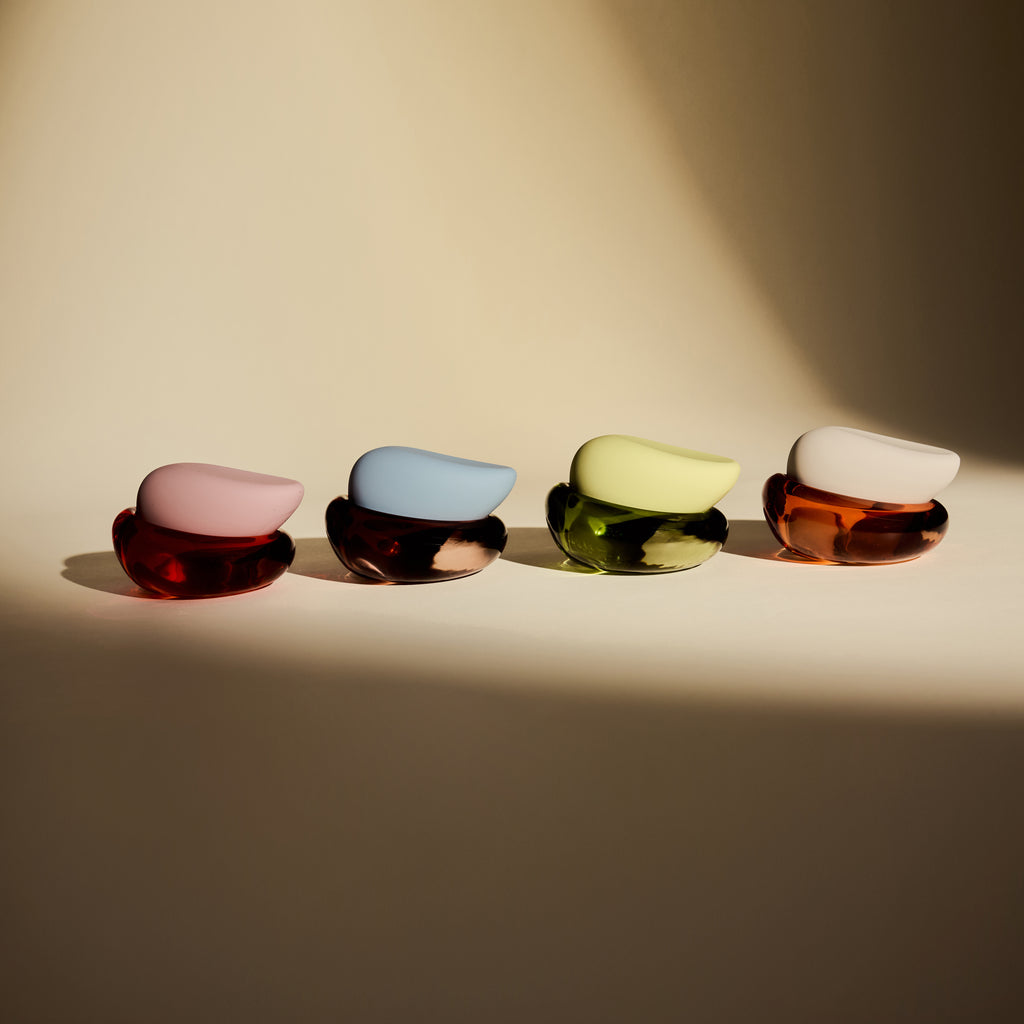
What it is and who makes it. The Rush is an air-pulse clitoral stimulator from LBDO, an Australian-owned, female-founded sexual wellness brand that has spent the last few years building a lubricant-and-design-forward catalogue. Rush is its first device, designed in Australia, and it began shipping within the United States in late July 2026 (US coverage landed July 29–30). The product page notes it took three years to design, which — given that the mechanism itself is well-established category tech — tells you most of that time went into the object.
Why It Matters
Rush is a clean data point on where the pleasure-device market is actually competing in 2026: not on the mechanism, on the object. Air-pulse technology has been price-compressed to the floor — sub-$60 at Womanizer's own Peach, roughly $30 at the ROMP Switch X. Once the core sensation is available at impulse-buy pricing, a $200 device has to justify itself on something else entirely. LBDO's answer is to attack discretion as a design constraint. The whole category has historically been engineered to disappear: neutral colors, disguised shapes, hidden storage. A weighted glass display base is an explicit bet that a meaningful segment of buyers no longer wants their toy to look like a secret — the same destigmatization thesis that put plusOne in 1,300 Ulta stores and So Divine into Boots this month, expressed at the industrial-design level rather than the retail level. It's also a reminder that the premium tier is now defended by taste rather than by technology, which is a structurally weaker moat. Womanizer holds patents; LBDO holds a colorway. That works while the aesthetic is differentiated and evaporates the moment a Shenzhen supplier ships a glass base.What makes it special. Honestly? The base. Rush ships with a weighted glass stand and comes in muted two-tone colorways — Rosewater/Coral, Sky/Cacao, Fog/Amber — and LBDO's entire pitch is that this is "a pulsing clitoral stimulator designed to live in the open." Not discreetly shaped like a lipstick or a rose or a lemon, and not hidden in a nightstand. Displayed, like a nice ceramic. That's the actual innovation here, and whether it's worth $200 depends entirely on how much you care about it.
The engineering is competent rather than boundary-pushing: air-pulse technology delivering rhythmic waves of pressure for indirect clitoral stimulation, nine intensity levels and patterns, and a single-button interface. Runtime is up to 110 minutes on a magnetic USB charge (about 100 minutes to fill). Worth flagging clearly: the water resistance rating is IPX6, which means splash-resistant, not submersible. Several competing air-pulse toys at this price and well below it are IPX7 and shower-safe. If bath or shower use matters to you, this is the spec that should stop you.
The single-button design is a genuine trade-off, not just a simplification. You cycle forward through nine patterns with one button and can't jump back — the same complaint reviewers levelled at the Hello Nancy Lem. Great for a first-timer who wants no learning curve; mildly irritating if you know exactly which setting you want.
What reviewers and users are saying. LBDO cites two credible editorial wins on its own product page: Best Design-y Air Suction Toy from New York Magazine's The Strategist, and Best Overall Luxury Sex Toy from marie claire. Treat those as brand-reported until you see them at the source — we could not independently pull either roundup during research, so we're citing them as LBDO's claim rather than as verified awards. Australian sexologist Chantelle Otten, who is publicly associated with the brand, told USA Today's shopping desk that "what stands out about Rush is how intuitive and unintimidating it feels from the first use," describing air-pressure stimulation that lets pleasure "build gradually rather than feeling abrupt or overwhelming." Note the relationship there — that's a brand-adjacent expert, not an independent reviewer. What we did not find is a substantial body of independent long-form reviews or Reddit consensus, which is unsurprising for a device this new to the US market. If you want crowd-verified performance, wait a few months.
Price and where to buy. $200 USD, sold direct from LBDO's US site (us.lbdo.com), now shipping within the United States. The brand's Australian storefront carries the full range. At this price it lands in the same bracket as the Womanizer Premium 2 ($219) and Womanizer Next ($219), and roughly double the Womanizer Liberty 2 (~$99) — which is the comparison the Rush has to survive, because Womanizer effectively invented this category and its Pleasure Air mechanism is the reference implementation.
Materials and safety. Body-contact surfaces are FDA-grade silicone, with ABS plastic and a UV-oil finish on the housing; the battery is a magnetic-charging lithium-ion cell. That's a clean, body-safe spec — no TPE, no jelly rubber, nothing to worry about. Use water-based lubricant only; LBDO specifically warns against silicone and oil-based lubes, which will degrade the silicone. Standard care: warm water and mild soap or a water-based toy cleaner, pat dry, and — given the IPX6 rating — make sure the magnetic charging contacts are completely dry before charging.
The bottom line. Buy the Rush if you want air-pulse stimulation in an object you'd genuinely be happy leaving out on a shelf, and if you're new enough to the category that a one-button, nine-pattern interface feels like a feature. It's a well-made, body-safe, aesthetically ambitious entry point, and the gradual build that air-pulse tech provides is legitimately friendlier for beginners than a powerful direct vibrator.
Skip it if you're a power user who wants granular control, if you want to use it in the shower (IPX6 rules that out), or if you're value-shopping — the Womanizer Starlet 3 and the ROMP Switch X deliver the same fundamental mechanism for $59 and roughly $30 respectively. You are paying a real premium here for industrial design and a glass stand. That's a perfectly legitimate thing to pay for, as long as you know that's what you're buying.
Sources
- Rush Clitoral Stimulator | Air Pulse Technology for Targeted Pleasure — LBDO (product page, full specs)
- This $200 air-pulse stimulator is trending—and now shipping in the U.S. — USA Today shopping desk (via AOL)
- Rush Clitoral Stimulator — LBDO US storefront
Update — 2026-07-30
Initial entry — story first created.