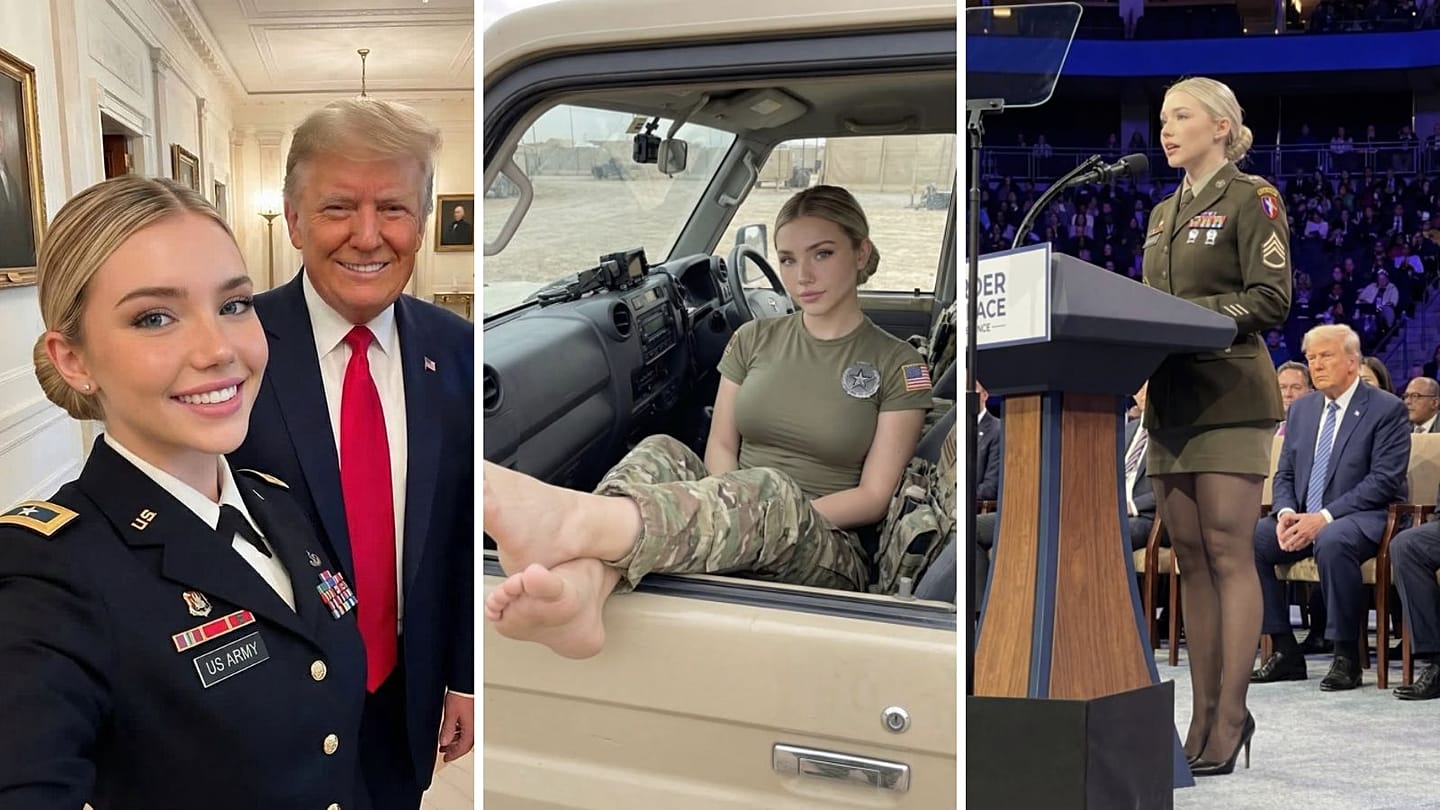
In mid-March 2026, an investigation revealed that "Jessica Foster" — a patriotic, pro-Trump young woman in military uniforms who had amassed nearly one million Instagram followers — was entirely AI-generated. The account, launched on December 14, 2025, rode a wave of MAGA-aligned content to viral status, primarily attracting male audiences with images of an attractive woman in uniform alongside pro-military and politically conservative messaging. The true purpose of the operation was far less patriotic: funneling followers to an OnlyFans foot-fetish account (@jessicanextdoor) that monetized subscriber tips and adult content.
Why It Matters
The Jessica Foster operation is a case study in how AI-generated personas can exploit cultural identity for adult content monetization at scale. For platforms like Instagram and OnlyFans, it exposes gaps in identity verification systems that allowed a synthetic person to build a massive audience and generate revenue without ever proving they exist. For the creator economy, it raises an uncomfortable question: if an AI avatar can build a million-follower funnel to OnlyFans in three months, what does that mean for real creators competing for attention and income? The case will likely accelerate platform investment in AI-generated content detection and could fuel calls for mandatory disclosure of synthetic media across social and adult content platforms.The deception unraveled through visual artifacts that are hallmarks of AI-generated imagery. A military uniform photo displayed "Jessica" on the nametag rather than "Foster" — a violation of U.S. Army protocol, which requires surnames only. Another image from a Trump event showed a placard reading "Border of Peace" when the actual conference name was "Board of Peace." These errors, combined with other telltale AI artifacts, prompted closer scrutiny that confirmed no real person behind the account existed.
Euronews broke the story on March 17, followed by the Washington Post on March 20 and Fast Company. The coverage highlighted multiple layers of concern beyond simple catfishing: the account violated platform policies requiring verified human identities, it exploited political sentiment for commercial gain, and it commodified the image of women serving in the military during an era of active conflict. The anonymous creator behind Jessica Foster has not been identified, and the account's rapid growth — from zero to nearly a million followers in roughly three months — raises questions about whether algorithmic amplification or coordinated inauthentic behavior played a role.
The Jessica Foster case sits at the intersection of AI deception, political manipulation, and adult content monetization — a combination that platform trust and safety teams are increasingly struggling to detect and address. With AI-generated avatars becoming visually indistinguishable from real people, the incident underscores how easily synthetic identities can be weaponized for audience-building and revenue extraction.
Sources
- Meet Jessica Foster, the Viral OnlyFans AI Fooling Millions of MAGA Fans — Euronews
- Jessica Foster, MAGA Dream Girl AI Fake — Washington Post
- Jessica Foster: Popular MAGA Influencer Is AI Model — Fast Company
Update — 2026-03-22
Initial entry — story first created.