Three Months, One Click: Bangladesh's Incepta Launches the First Generic Self-Injectable Contraceptive
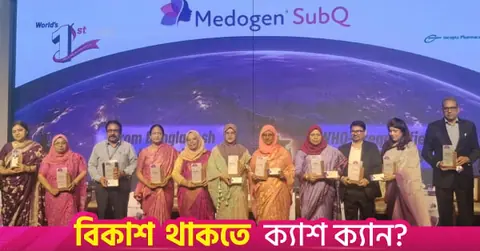
On November 24, 2026, Dhaka-based Incepta Pharmaceuticals launched Medogen SubQ at a ceremony at the Pan Pacific Sonargaon Hotel, attended by about 500 gynaecologists. It is a 104 mg subcutaneous injection of medroxyprogesterone acetate (DMPA) in a pre-filled Uniject device. One shot protects for three months (re-dosed every 12 to 14 weeks), and a woman can inject it herself after training. Incepta calls it the world's first generic version of the WHO-prequalified self-injectable DMPA-SC format. It is also Bangladesh's first self-administered contraceptive. Bangladesh's Directorate General of Drug Administration has approved it.
The price is the point. The Business Standard reports a dose costs Tk550, which the company says is 5.52 times cheaper than equivalent oral therapy. Medogen SubQ is also indicated for endometriosis-associated pain at the same dose and interval. Professor Firoza Begum, president of the Obstetrical and Gynaecological Society of Bangladesh, said it could cut the cost of endometriosis treatment by 80–90%. In the keynote, Professor Maruf Siddiqui of the Fertility & Sterility Society of Bangladesh cited more than 99% contraceptive efficacy, comparable to the intramuscular shot, and a 2,042-woman study in which no pregnancies were detected. He added that the lower-dose formulation may cause less bone-mineral-density loss than the traditional intramuscular injection. Side effects listed include changes in bleeding, weight gain, headache and injection-site reactions. Women must consult a registered physician before starting.
Chairman and MD Abdul Muktadir told The Daily Star that development took 13–14 years (starting in 2011) and around $60–70 million. Incepta is now bringing the supply chain home. It plans to make the active ingredient locally, because the API's price has risen from about $500 to more than $860 per kg. It is also building a gamma irradiation facility and looking at producing the injection device locally, since the device's cost has jumped from 50–60 cents to $21 per dose, according to Muktadir. Executives framed the launch as a step into the wider global reproductive-health market.