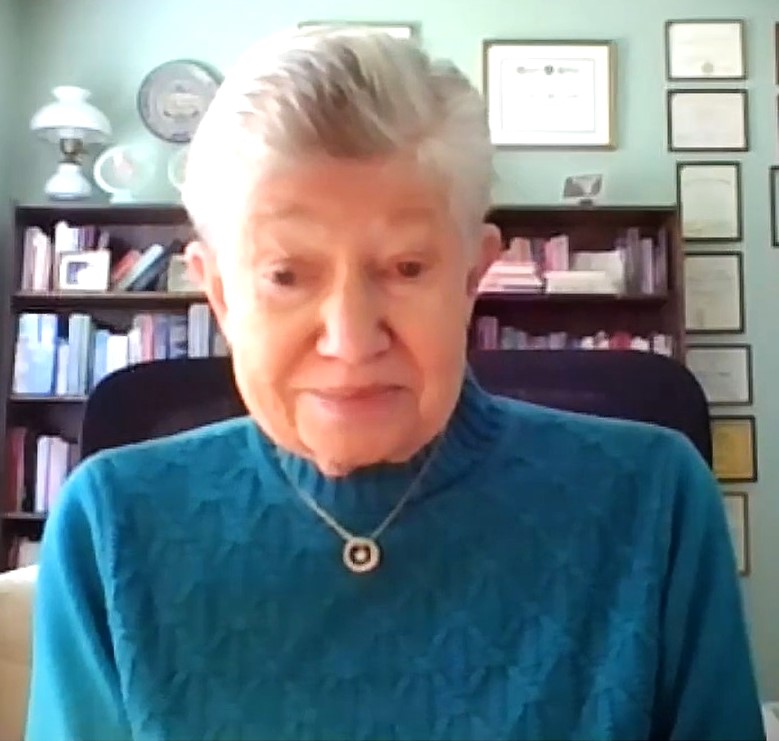
Dr. Beverly Whipple, PhD, RN, FAAN, died on Monday, November 2, 2026, at home in Voorhees, New Jersey, according to her family's obituary on Legacy.com (published November 4) and her Wikipedia entry. She was 85. Wikipedia gives the cause as complications of Alzheimer's disease. The New York Times published its obituary on November 4 under the headline "Beverly Whipple Has Died. She Introduced the G-Spot to the Mainstream." Whipple was Professor Emerita at Rutgers University. She trained as a nurse, earning a BS in nursing from Wagner College, and later completed a PhD in psychobiology with a major in neurophysiology at Rutgers.
Why It Matters
**A large part of the modern vibrator industry rests on her work.** G-spot vibrators, curved wands, "come-hither" massagers and rabbit designs, which make up a big share of the hundreds of product guides in our Toys archive, follow from the anatomy Whipple brought into public view in 1982. Her work turned an obscure gynaecological observation into something consumers looked for and product designers built around. The scientific argument over whether the G-spot is a distinct structure has never been settled, and her own later reviews acknowledged that. Commercially, though, it is one of the most successful ideas sexology has produced. **She was also an early researcher in pleasure science.** Her background was in nursing, not marketing, and her work on orgasm after spinal cord injury anticipated the disability-inclusive design and evidence-based pleasure research that sextech now promotes (see our coverage of [adaptive tools for disabled users](/stories/sex-toys-adaptive-tools-disability)). Founders who talk about "science-backed pleasure" are working in a field she helped make respectable.The G-spot, and the debate over it. Whipple co-authored the 1982 international bestseller The G Spot and Other Recent Discoveries About Human Sexuality. Her family says it was translated into 22 languages and reissued as a classic in 2005. A year before the book, she co-authored the 1981 Journal of Sex Research paper "Female ejaculation: a case study" (Addiego et al.), which Wikipedia identifies as the first published use of the term "G-Spot." The idea was disputed from the start; the Journal of Sex Research called the female-ejaculation debate "heated" in 1984. Whipple later co-authored "Who's Afraid of the G-spot?", a six-scientist review in the Journal of Sexual Medicine that concluded more research was needed.
Beyond the book. Her research on women's sexual physiology later used fMRI brain imaging. Wikipedia credits her work with contributing to the finding that orgasm signals can reach the brain through the vagus nerve, bypassing the spinal cord, which helped show that some women with spinal cord injuries can experience orgasm. Her other co-authored books include Safe Encounters, The Science of Orgasm (2006) and The Orgasm Answer Guide (2010). Her family's obituary lists 250+ research articles and chapters, 800+ talks, more than 115 awards, and 300+ radio and TV appearances. The awards include the World Association for Sexual Health's Gold Medal, the Masters and Johnson Award from SSTAR, AASECT's Professional Standard of Excellence and Distinguished Service awards, and the SSSS Kinsey and Bullough awards. New Scientist named her one of its 50 most influential scientists in 2006, and a sexology research centre in Puebla, Mexico, has carried her name since 2013. Services are scheduled for November 11–12 in Marlton and Cherry Hill, NJ.
Sources
- Dr. Beverly Whipple Obituary (2026) — Bradley Funeral Home via Legacy.com (Nov 4, 2026)
- Beverly Whipple — Wikipedia
Update — 2026-11-05
Initial entry — story first created.