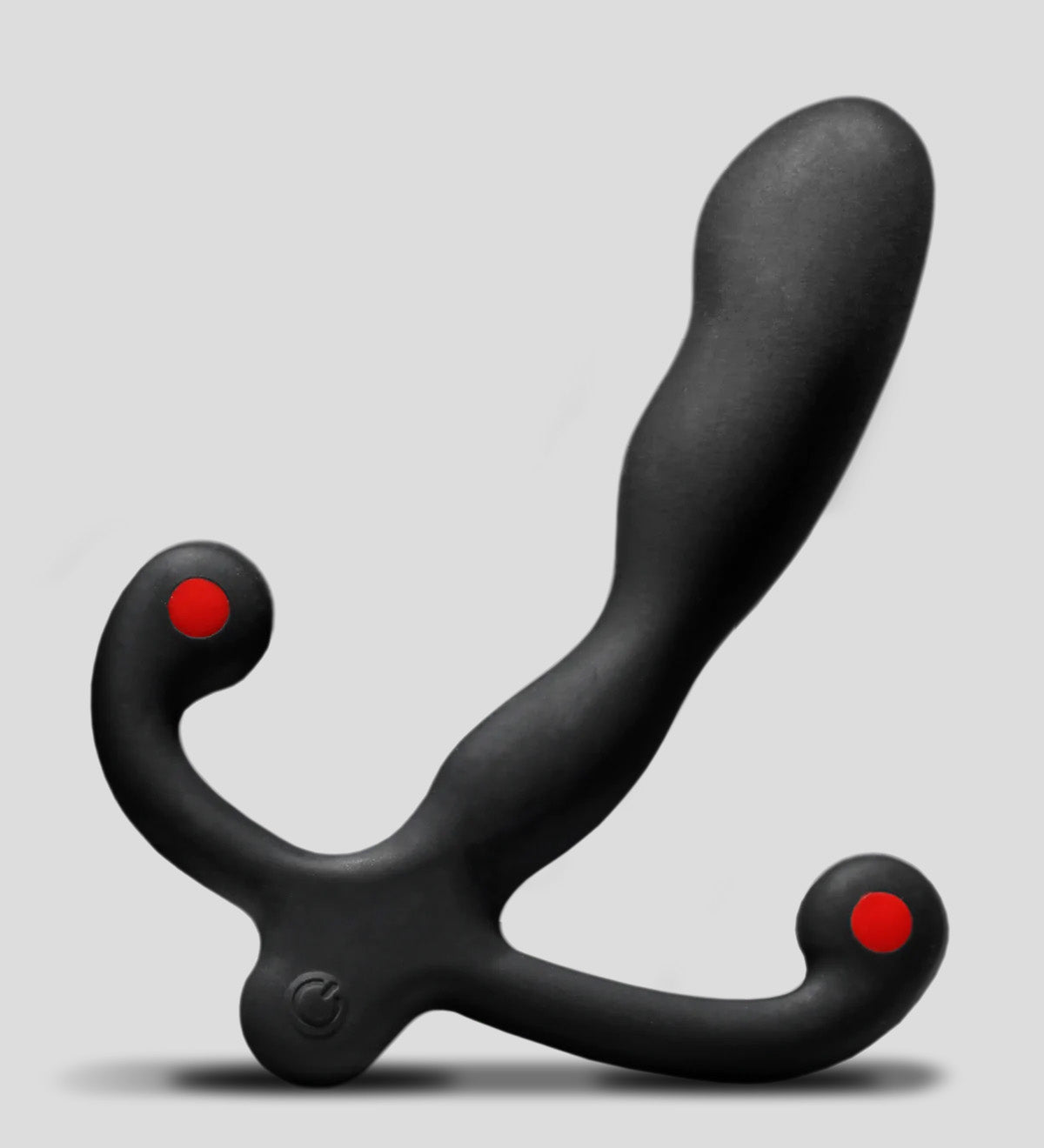
The Aneros Helix Syn V is the vibrating edition of the brand's best-known prostate massager, and the "V" does double duty — it flags the vibrating version and marks it as the fifth model in the Helix family. Aneros has been building hands-free prostate toys since the company essentially invented the category, and the Helix Syn Trident that this one derives from remains its top-ranked product. The Syn V takes that anatomy and adds a motor.
Why It Matters
Prostate toys are one of the few pleasure categories still growing off a small base, and they sit at an unusual crossroads: half the marketing is wellness-coded, half is straightforwardly pleasure-coded, and the customer often arrives via a urologist's waiting room rather than a sex shop. Aneros is the incumbent that defined the hands-free approach, and the Syn V is a useful case study in how a category leader adds a feature its own community spent years arguing against — by engineering the feature to serve the original mechanism rather than replace it.What makes it different. Everything Aneros does hinges on being hands-free: you insert it, contract your pelvic floor, and the toy pivots inward and upward against the prostate, perineum, anus and what the brand calls the K-spot. No holding, no thrusting. The Syn V keeps that mechanism and layers on 8 vibration patterns at 3 intensity levels — 24 combinations — and it works in both powered and unpowered modes, so it functions as a conventional Aneros with the motor off. That dual-mode design is deliberate. Aneros spent years resisting requests to add vibration, and the company's own product page is candid about why: the community argued that early vibrating products were "large, unsophisticated, and more often than not desensitizing," which is the opposite of what a toy built around amplifying subtle internal sensation wants. The Syn V's patterns were curated with the brand's user testing group specifically to generate sensation "without desensitizing or masking the body's own responses." High speed runs roughly three times the intensity of medium for people who want the loud version.
What reviewers say. Independent long-form reviews of this specific model are thin, which is worth being upfront about. Vice's September 2026 male sex toy roundup called out the Helix Syn V by name, praising the premium silicone coating and noting it holds a 4-star average review score at Lovehoney. The broader Aneros hands-free category has a long, well-documented following — Afterglow has separately covered the Helix Syn Trident, MGX Trident, Progasm Ice and Eupho Trident — and the consistent user consensus across those models is that the learning curve is real and the payoff is unlike anything a handheld toy delivers. If you've never used an Aneros, the Syn V is not the easiest entry point; the non-vibrating Helix Syn Trident is.
Price and where to buy. List price is $99.95 direct from Aneros, which offers free US shipping over $75 and a 60-day guarantee. Vice flagged it discounted to $69.99 from $99.99 at Lovehoney during the early-September promotional window — worth checking, since pleasure retail runs near-continuous sales cycles. Vibrating Aneros products carry a two-year warranty from purchase.
Materials and safety. The Syn V is coated in soft silicone over the rigid Aneros core — the same "Syn" construction that made the Helix Syn line easier to insert than the hard-plastic originals. Body-safe silicone, non-porous, no phthalate concerns. As with any anal toy, the flared base and retrieval design are the safety feature that matters most, and Aneros's whole architecture is built around it.
The bottom line. Buy this if you already know you like hands-free prostate play and want vibration that supplements rather than steamrolls the sensation. Buy the plain Helix Syn Trident instead if you're new to the category and want to learn the muscle control first. And skip it entirely if what you actually want is a powerful vibrating plug you hold and move — that is a different product category, and the Syn V will feel underpowered by comparison. It is not trying to be loud. That's the point.
Sources
- Aneros Helix Syn V — Aneros official product page
- Fellas, Is It Time to 'Retire the Hand'? These Deals from Lovehoney Make a Solid Argument — VICE
Update — 2026-09-06
{Initial entry — story first created.}